Leave Your Message
Garden Water Storage Tanks can make rainfall easier to save for dry days, but choosing one involves more than comparing prices. This guide to the top 10 garden water storage tanks for sale highlights practical features to consider before buying. Think about where the tank will sit: beside a shed, beneath a downpipe, or in a narrow side passage. Measure the available space, including room to reach the tap and remove the lid. Details matter.
Capacity should match your roof area, local rainfall, and typical garden use. A small tank may suit a few containers and occasional watering; a larger model may be more useful for raised beds or longer dry spells. Compare materials, UV resistance, inlet and outlet sizes, overflow arrangements, and whether a stand is included. Check the manufacturer’s specifications for installation requirements and care instructions, since similar-looking models can differ in important ways. Measure twice.
The selections in this guide are intended to help readers compare options, not promise that one tank will suit every garden. Product availability, dimensions, and prices can change, so confirm current details with the seller before ordering. Also consider how you will move water from the outlet to plants at different points in your yard. A tank can look ideal online and still feel awkward in a tight space. No shortlist is perfect; the best choice depends on your layout, budget, and watering routine. Before buying, it is worth checking those details again.
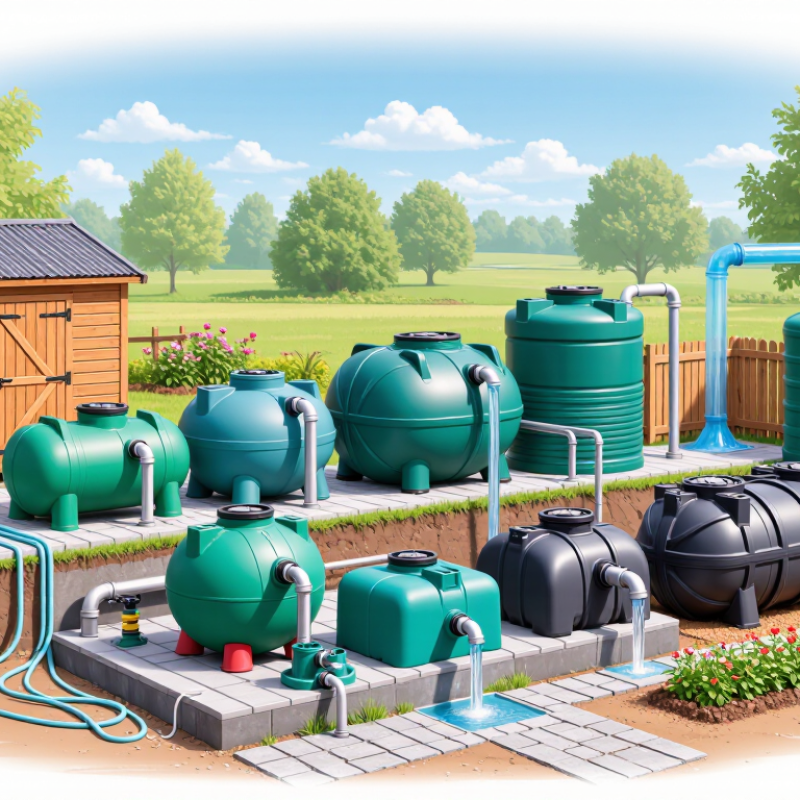
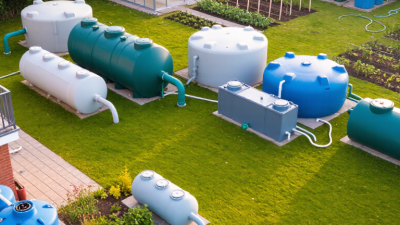
Garden water storage tanks hold rainwater collected from roofs or water delivered through a hose. In a typical setup, gutters guide rain into a downpipe, then through a screen that catches leaves and roof debris. The tank stores the water until it is needed for beds, pots, or lawn care. A covered inlet helps keep out insects and debris, while an overflow outlet directs excess water away when the tank is full.
Water can leave through a bottom tap if the tank sits above the garden, using gravity. For a tank at ground level, a small pump may provide enough pressure for a hose or drip line. Simple, but not foolproof. I’ve found that a screen can clog faster than expected after windy weather, so it needs regular checking. Choose a stable, level base; a full tank is extremely heavy. A dark, UV-resistant, tightly covered tank can help limit algae growth, though it will not make stored water safe to drink. Check fittings for drips and clear sediment from the base periodically. Even a well-installed tank needs attention.
Garden water storage tanks collect and hold water—often rainwater from a roof and gutters—for later use in irrigation and other suitable outdoor tasks. Water typically enters through an inlet or filter and leaves through a tap, hose connection, or pump. Capacities and dimensions below are indicative examples; actual product specifications vary by design and seller.
| Tank type | Typical capacity | Approx. dimensions | Common material | How it works and best use | Practical considerations |
|---|---|---|---|---|---|
| Compact slimline tank | 100 gal (379 L) | About 36 × 24 × 40 in (91 × 61 × 102 cm) | UV-stabilized polyethylene | Collects roof runoff through a downpipe diverter; useful for a small patio or garden. | Check that the outlet is accessible and the filled tank is supported on a firm, level base. |
| Small vertical round tank | 200 gal (757 L) | About 36 in diameter × 60 in high (91 × 152 cm) | Polyethylene | Stores filtered rainwater for watering beds with a gravity-fed tap or a small pump. | Allow room for the lid, inlet plumbing, and access for cleaning. |
| Rectangular garden tank | 300 gal (1,136 L) | About 48 × 36 × 48 in (122 × 91 × 122 cm) | Polyethylene | A broad, low-profile option for collecting roof runoff where vertical clearance is limited. | Confirm the base can carry the substantial weight of a full tank—water weighs about 8.34 lb per US gallon. |
| Large slimline tank | 500 gal (1,893 L) | About 96 × 30 × 48 in (244 × 76 × 122 cm) | UV-stabilized polyethylene | Fits alongside a wall or fence and supplies larger gardens through a tap or pump. | Measure the route to the installation spot and check the tank’s full dimensions, not just its footprint. |
| Reusable IBC-style tote | 275 gal (1,040 L) | About 48 × 40 × 46 in (122 × 102 × 117 cm) | Plastic inner container with a metal cage and pallet base | The caged container stores bulk water and usually has a bottom outlet for hose connection. | Use only a tote with a known history and suitable previous contents; inspect the valve, cage, and pallet. |
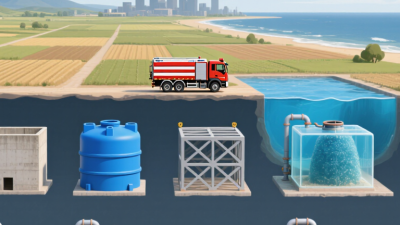
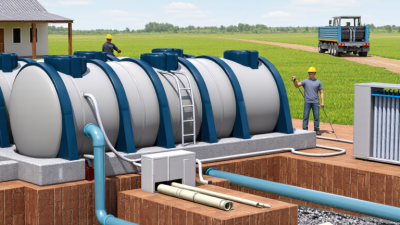
| Underground storage tank | 500 gal (1,893 L) | Example: about 60 in diameter × 72 in long (152 × 183 cm) | Burial-rated polyethylene | Receives rainwater through buried pipework; a pump brings stored water to garden outlets. | Requires suitable excavation, access for maintenance, and installation to the manufacturer’s burial instructions. |
| Linked modular tanks | 400 gal total (1,514 L), using four 100-gal tanks | Each tank about 24 × 24 × 48 in (61 × 61 × 122 cm) | Polyethylene | Connecting the tanks with appropriate linking pipes lets them fill and draw down as a shared system. | Provide a level base for every tank and make sure the connectors are compatible and watertight. |
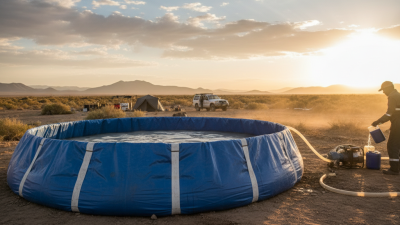
| Flexible bladder tank | 500 gal (1,893 L) | When filled, roughly 96 × 72 × 18 in (244 × 183 × 46 cm); shape varies | Coated flexible fabric | Fills into a low-profile bladder, often placed beneath a deck or in a protected utility space. | Needs a smooth, debris-free surface and protection from punctures, sharp edges, and excessive heat. |
| Large vertical round tank | 1,000 gal (3,785 L) | Example: about 64 in diameter × 96 in high (163 × 244 cm) | UV-stabilized polyethylene | Holds a larger rainwater reserve; a pump can supply irrigation over a wider area. | Check access, overhead clearance, inlet capacity, and the weight-bearing strength of the base. |
| Large concrete cistern | 2,500 gal (9,464 L) | Example: about 96 × 72 × 96 in (244 × 183 × 244 cm) | Reinforced concrete | A large fixed cistern collects and stores runoff for extensive gardens, typically using a pump. | Requires professional planning for delivery or construction, foundation, drainage, and safe access. |