Water storage is no longer a secondary infrastructure decision. It is a daily resilience requirement. The WHO/UNICEF Joint Monitoring Programme reported that 2.2 billion people lacked safely managed drinking water services in 2022. Meanwhile, the United Nations World Water Development Report 2024 notes that agriculture accounts for roughly 70% of global freshwater withdrawals. These figures show why dependable Reservoir Tanks matter across farms, factories, municipalities, and emergency supply systems.
This guide, “Top 10 Reservoir Tanks for Global Water Storage Buyers,” compares practical options for different operating conditions. It considers capacity, material, corrosion resistance, installation time, maintenance access, transport, and lifecycle cost. Steel, concrete, polyethylene, fiberglass, and modular tanks each solve different problems. A coastal desalination site may prioritize protective coatings, while a remote farm may need rapid assembly and simple repairs. Potable-water buyers should also review recognized requirements, including NSF/ANSI/CAN 61, AWWA tank standards, and applicable national regulations. FAO AQUASTAT data further reinforces the importance of matching storage design with local water availability and demand patterns.
There is no universal winner. A low purchase price can hide foundation work, liner replacement, or difficult cleaning. Supplier claims also require verification through drawings, test records, warranty terms, and installation references. This ranking is a practical starting point, not a substitute for an engineer’s site assessment. Some market data remains incomplete, especially in smaller regions. That limitation deserves attention. Good buying decisions begin with honest assumptions, measured demand, and a clear plan for the next decade.
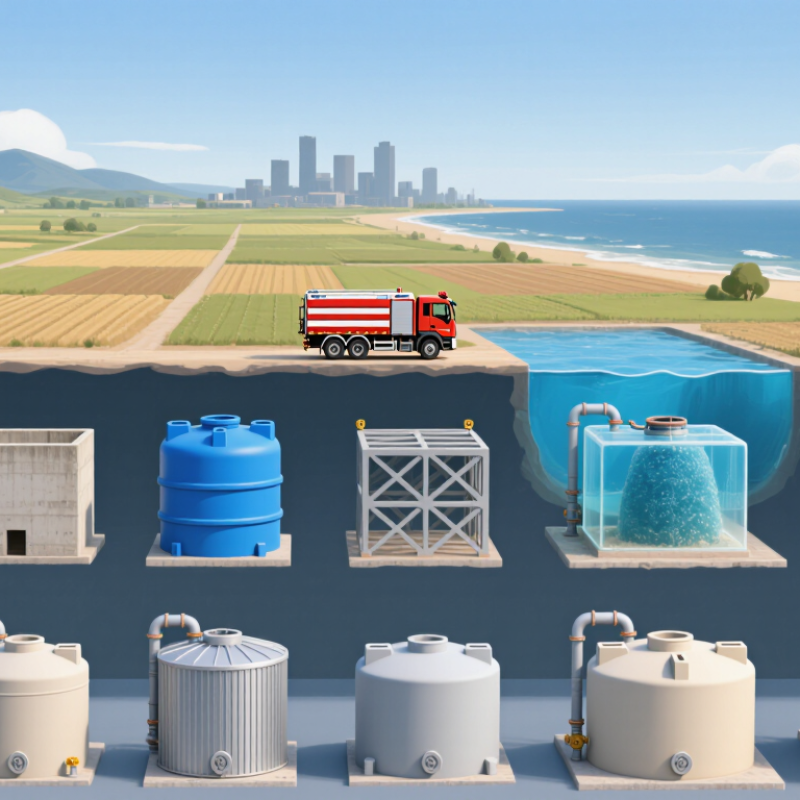
Reservoir tanks are engineered containers that store water before distribution, treatment, irrigation, or emergency use. They support cities, farms, factories, hospitals, and remote communities. Unlike open ponds, enclosed tanks reduce exposure to dust, algae, animals, and sudden weather changes. A properly designed tank can also stabilize pressure during peak demand. Storage volume matters, but it is not the only concern.
The ten common options include bolted steel, welded steel, concrete, fiberglass, polyethylene, sectional panel, underground, elevated, flexible bladder, and geomembrane-lined tanks. Each design suits different ground conditions, climates, budgets, and water qualities. Steel tanks often provide large capacity and straightforward expansion. Concrete works well for permanent installations. Flexible systems can serve temporary projects or uneven sites. However, no tank performs perfectly everywhere. Local soil movement can challenge rigid structures.
Reliable selection requires professional assessment of water chemistry, wind loads, seismic risk, foundation strength, access, and cleaning requirements. Food-grade linings may be necessary for drinking water. In hot regions, insulation or reflective coatings can limit temperature growth. In freezing climates, circulation and protective controls deserve close attention. Operators should inspect seams, valves, ladders, vents, and internal surfaces on a defined schedule. Small leaks become expensive quickly. Even experienced planners sometimes underestimate maintenance access, so future repairs should influence the design from the beginning.
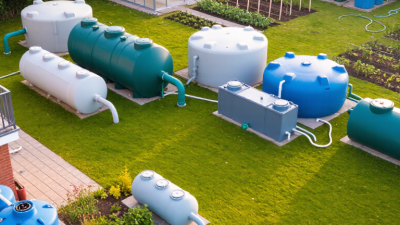
Choosing among the top reservoir tank types requires more than comparing capacity and price. Application conditions matter.
The WHO and UNICEF Joint Monitoring Programme reported that 2.2 billion people lacked safely managed drinking water in 2022.
This highlights the need for reliable storage, especially in remote or expanding communities.
Bolted steel tanks suit large municipal or industrial sites because sections are easier to transport and replace. Welded steel tanks offer strong structural control, but installation requires skilled crews and strict coating inspections. Concrete tanks work well underground or near buildings, although cracking and long curing periods remain practical concerns. Flexible geomembrane tanks fit temporary storage and irrigation, while HDPE or fiberglass tanks resist corrosion in smaller systems.
The FAO reports that agriculture accounts for roughly 70% of global freshwater withdrawals, making farm storage capacity a major design factor.
Yet, a larger tank is not always better. Poor turnover can reduce water quality.
Compare five details before selecting: water chemistry, climate, foundation strength, inspection access, and expected refill cycles. Ask for test records, coating specifications, and seismic calculations. Local wind data matters too. Designers sometimes underestimate empty-tank uplift. That mistake can become expensive.
For potable water, verify approved lining materials and cleaning procedures.
For fire protection, confirm usable volume, not just the advertised capacity.
A careful lifecycle review should include transport, assembly, maintenance, and eventual replacement. Industry data guides decisions, but site evidence still deserves the final word.
Reliable long-term water storage begins with material selection, not tank size. The ten most practical designs include galvanized steel, bolted steel with protective liners, reinforced concrete, fiberglass, high-density polyethylene, welded steel, sectional panel tanks, flexible bladders, underground concrete tanks, and modular composite systems. Each option responds differently to sunlight, soil movement, temperature changes, and water chemistry.
Galvanized and coated steel tanks provide strong walls for large agricultural or industrial volumes. Their joints require careful inspection, especially around outlets and roof connections. Concrete tanks resist fire and impact, but poor curing can create cracks and hidden leakage. Fiberglass and polyethylene resist corrosion and suit many smaller installations. However, some plastics expand under heat. Dark surfaces can also raise internal water temperatures.
Design details often decide service life. A level, compacted foundation prevents uneven loading. Roof ventilation reduces condensation, while screened openings limit insects and debris. Food-safe liners should match the stored water and remain compatible with disinfectants. External ladders, drain points, and inspection ports make cleaning safer and more practical. Small fittings matter.
Field checks frequently reveal an overlooked issue: installers focus on capacity but ignore maintenance access. That choice becomes expensive later. I would also question claims of “maintenance-free” storage. Every tank needs inspection, sediment removal, and checks for corrosion, liner wear, or UV damage. A well-designed tank makes those tasks visible and manageable.
| Rank | Tank Type and Design | Primary Materials | Typical Capacity Range | Indicative Service Life | Best-Fit Applications | Key Reliability Advantages | Important Limitations | Potable-Water Suitability |
|---|---|---|---|---|---|---|---|---|
| 1 | Glass-Fused-to-Steel Bolted Tank | Steel panels with a factory-fused glass coating, sealed joints and steel roof | 100–10,000 m³ | 30–60 years with proper maintenance | Municipal reserves, fire-water storage, industrial process water and large agricultural systems | High corrosion resistance, rapid modular installation, standardized panel replacement and good suitability for expansion | Requires a level foundation, careful gasket installation and inspection of penetrations, roof and fasteners | Excellent |
| 2 | Prestressed Concrete Reservoir | High-strength concrete, prestressing tendons, waterproof liner or protective coating | 500–100,000+ m³ | 50–100 years when engineered and maintained correctly | Large municipal reservoirs, strategic water reserves and bulk potable-water storage | Very high structural capacity, strong resistance to wind and fire, low maintenance over a long design life | High civil-works cost, long construction period, heavy foundation requirements and potential cracking if poorly designed | Excellent |
| 3 | Welded Carbon-Steel Tank | Welded carbon steel with internal lining and external protective coating | 50–5,000 m³ | 20–40 years, depending on coating maintenance | Industrial water, fire protection, irrigation and above-ground utility storage | Flexible engineering, high mechanical strength, efficient use of site area and compatibility with many fittings | Coatings require periodic inspection and renewal; welding quality and corrosion control are critical | Good with certified lining |
| 4 | Stainless-Steel Modular or Welded Tank | Stainless steel panels or welded stainless-steel plates with hygienic fittings | 10–2,000 m³ | 30–50 years in suitable environments | Drinking water, food and beverage facilities, hospitals and high-hygiene installations | Excellent hygiene, smooth cleanable surfaces, strong corrosion resistance and low risk of coating contamination | Higher material cost; chloride-rich, coastal or chemically aggressive environments require correct grade selection | Excellent |
| 5 | Cast-in-Place Reinforced-Concrete Tank | Reinforced concrete with waterproofing admixtures, liner or protective coating | 100–50,000 m³ | 50–100 years with effective crack and water-ingress control | Underground reservoirs, roof-supported facilities, municipal storage and integrated treatment plants | Can be built to site-specific shapes, provides thermal stability and offers strong resistance to impact and weather | Construction quality is highly dependent on curing, joints, reinforcement detailing and waterproofing workmanship | Excellent |
| 6 | Galvanized Corrugated-Steel Tank | Corrugated galvanized steel panels with bolted connections and a liner where required | 5–500 m³ | 15–30 years, depending on exposure and corrosion protection | Rainwater harvesting, farms, remote sites, livestock water and small fire-water systems | Fast installation, relatively low initial cost, transportable panels and broad availability of replacement parts | Galvanized surfaces can corrode in aggressive atmospheres; liners and joints require routine inspection | Good with approved liner |
| 7 | Glass-Reinforced Plastic (GRP/FRP) Tank | Fiberglass-reinforced polymer with resin-rich internal surfaces | 1–500 m³ | 25–50 years with UV protection and suitable resin selection | Corrosive environments, industrial water, compact municipal installations and remote locations | Lightweight, corrosion-resistant, easy to transport and suitable for many chemically demanding environments | Can be damaged by impact or poor support; ultraviolet exposure, resin compatibility and fittings need attention | Good with certified resin |
| 8 | Rotational-Moulded Polyethylene Tank | UV-stabilized high-density polyethylene or linear polyethylene, usually double-wall or single-wall | 0.5–100 m³ | 20–35 years, depending on UV exposure and handling | Domestic supply, rainwater collection, agricultural use and small commercial facilities | Lightweight, non-corrosive, easy to install, low maintenance and available in many compact shapes | Limited structural height, thermal expansion, sensitivity to impact and lower capacity than engineered steel or concrete tanks | Excellent with potable-grade resin |
| 9 | Flexible Bladder or Pillow Tank | Flexible reinforced fabric with a water-compatible elastomeric or polymer coating | 1–1,000 m³ | 10–20 years under protected conditions | Temporary storage, emergency response, humanitarian supply, military operations and remote construction sites | Very fast deployment, low transport volume when empty, minimal foundation work and low evaporation when covered | Requires a smooth protected base, careful handling and inspection for abrasion, puncture and seam damage | Good with approved fabric |
| 10 | Geomembrane-Lined Earth Reservoir | Compacted earth embankment with HDPE, LLDPE, PVC or other engineered geomembrane liner | 100–1,000,000+ m³ | 10–30 years for the liner; longer for the earthworks | Agricultural irrigation, stormwater management, mining process water and large non-potable reserves | Very large volume at comparatively low cost, adaptable to site topography and efficient for seasonal storage | Needs substantial land, drainage and leak detection; liner damage, settlement and animal intrusion must be managed | Primarily non-potable |
Note: Capacity and service-life figures are typical planning ranges rather than guarantees. Actual performance depends on water chemistry, climate, seismic conditions, foundation design, installation quality, applicable drinking-water approvals and the inspection and maintenance program.
Top 10 Reservoir Tanks for Global Water Storage Buyers
How Capacity, Installation, Maintenance, and Cost Shape Tank Selection
Top reservoir tank choices include bolted steel, welded steel, concrete, fiberglass, polyethylene, and flexible bladder designs. Other options include galvanized steel, stainless steel, corrugated steel, and underground concrete tanks. Each design serves different storage conditions. Capacity is the first filter, not the final decision. A 50,000-liter tank may suit a farm, while a 500,000-liter unit supports municipal demand. Check peak use, fire reserves, future expansion, and local water pressure. Extra capacity often costs less than emergency replacement.
Installation can change the budget quickly. Large tanks need stable foundations, crane access, drainage, and safe maintenance clearance. Remote sites may favor modular tanks because panels travel more easily than oversized vessels. However, modular assembly needs trained crews and careful bolt inspection. Concrete demands longer curing time. Flexible tanks need a clean, well-graded base. Ignore the site, and a good tank can become a poor investment. That lesson is easy to overlook.
Maintenance should be priced before purchase. Inspect seams, roof fittings, liners, valves, and anchoring points at planned intervals. Water quality, sunlight, temperature, and sediment can shorten service life. Accessible ladders and replaceable components reduce downtime. Cost comparisons should include transport, foundation work, cleaning, inspections, repairs, and eventual disposal. The cheapest quotation is not always the lowest ownership cost. Still, premium specifications can be wasteful when demand forecasts are uncertain. I would rather document assumptions than pretend every calculation is exact.
Representative tank configurations compared by storage capacity, installation time, annual maintenance allowance, and indicative installed cost.
The figures are indicative international planning benchmarks for potable or process-water storage. Actual results vary with site access, foundation requirements, local labor, water quality, seismic standards, insulation, and transportation distance. Installed costs are shown in USD per cubic meter and exclude land, taxes, and water-treatment equipment.
Choosing a reservoir tank starts with regional water needs, not catalogue capacity. A tank serving dry farmland faces different demands from one supporting a coastal village. Estimate daily use, seasonal rainfall, fire reserves, and future population growth. Keep emergency volume separate from routine consumption. This avoids draining critical reserves during peak demand.
For remote sites, sectional steel tanks can simplify transport and assembly. Concrete reservoirs suit permanent installations with stable foundations and large capacity requirements. Polyethylene and fiberglass tanks resist corrosion and work well for smaller systems. Flexible bladder tanks can support temporary storage, but puncture risks deserve serious planning. Underground tanks save surface space, yet excavation costs and groundwater conditions may change the budget. Check local temperature ranges, seismic activity, wind exposure, and soil movement before selecting a structure. These details are easy to overlook.
Water quality also depends on design. Specify food-contact materials, covered access points, screened vents, safe overflow routes, and drain connections. Inspect internal coatings and joints before commissioning. Plan cleaning access from day one. A narrow opening may reduce the purchase price, but it can complicate inspection later. I have seen projects choose oversized tanks for comfort, then struggle with stagnant water and unnecessary maintenance. A smaller, modular system may perform better when demand is uncertain. Review calculations with a qualified local engineer, because regional codes and installation practices vary.