How to Choose Rain Storage Tanks for Global Projects?
Choosing Rain Storage Tanks for global projects demands more than comparing capacity and price. Climate, roof area, water quality, transport access, and maintenance conditions can change the correct specification. A 10,000-litre tank may support a rural clinic, yet fail quickly where dry seasons last six months. Context matters.
The WHO and UNICEF Joint Monitoring Programme reported that 2.2 billion people lacked safely managed drinking water in 2022. The UNESCO World Water Development Report 2024 also identifies water scarcity as a growing pressure across many regions. These findings make decentralized collection increasingly practical, especially for farms, schools, construction sites, and remote facilities. However, rain is irregular. Storage calculations must use local rainfall records, runoff losses, demand patterns, and safety margins. A simple annual average can mislead.
Rainwater harvesting expert Brad Lancaster states, “The best place to store water is in the soil.” His point challenges a tank-only mindset. Effective projects may combine Rain Storage Tanks with infiltration areas, first-flush systems, filtration, and controlled reuse. Tank material also matters. Polyethylene is lightweight and corrosion-resistant, while steel can provide structural strength when properly protected. Neither option is universally superior.
Global procurement adds another layer. Spare parts may be unavailable. Installation teams may have limited equipment. A technically excellent tank can still become an expensive white container if cleaning access is poor. That is an uncomfortable possibility, but it deserves attention. This guide examines sizing, materials, climate suitability, logistics, standards, and lifecycle costs. The goal is not the largest tank. It is dependable water storage that fits real conditions.
Define Water Demand with WHO’s 20–50 L per Person per Day Benchmark
How to Choose Rain Storage Tanks for Global Projects?
Water demand should guide every rainwater tank decision. WHO’s benchmark of 20–50 litres per person per day offers a practical planning range for basic domestic needs. The lower figure may suit carefully managed emergency supply. Higher demand is more realistic where bathing, cooking, cleaning, and sanitation require additional water. Climate, household habits, and seasonal access can change the estimate.
Calculate daily demand by multiplying the population by the selected allowance. Then add storage for dry days, roof runoff losses, and safe operational reserve. For example, 100 people using 30 litres daily need 3,000 litres per day. A ten-day reserve requires about 30,000 litres before adjusting for filtration losses and irregular rainfall. Check roof area and local rainfall records too. A large tank cannot collect water that never reaches the roof. A neat spreadsheet can still be wrong.
Tips: Use recent rainfall data, not averages alone. Inspect the roof material and gutter condition. Keep separate volumes for drinking water and other uses when possible. Include an overflow route and secure access cover. Field measurements often reveal problems that drawings miss. In one project, underestimated sediment reduced usable capacity within months. That mistake changed the maintenance plan, but it could have been avoided with a simple pre-season inspection.
Size Storage for Dry-Season Demand and a 95% Local Rainfall Record
How to Choose Rain Storage Tanks for Global Projects?
Tank sizing should begin with dry-season demand, not annual rainfall.
Build a monthly water-balance model using at least 20–30 years of local rainfall records. The World Meteorological Organization reports that 2023 brought unusually low river flows across many regions, showing why annual averages can mislead. Use the lower 95% rainfall condition from the local record, then calculate harvested water with this formula:
rainfall × catchment area × runoff coefficient
Metal roofs often perform better than rough surfaces, but dust and first-flush losses still reduce yield. A spreadsheet can still lie.
Estimate demand by user numbers, livestock, irrigation, and essential cleaning.
The WHO and UNICEF Joint Monitoring Programme reported that 2.2 billion people lacked safely managed drinking water in 2022. This makes reliable reserve planning more than a technical preference. Size storage to cover the longest dry-season deficit, while checking overflow during intense storms. Climate change adds uncertainty. Historical data is necessary, but it is not enough.
Tips:
Separate drinking and non-drinking demand where regulations allow. Keep emergency water isolated. Add a first-flush diverter and inspect screens before the wet season. Use local evaporation and leakage assumptions, not generic percentages. Recheck the design after one year of real demand data. The first estimate may be wrong. That is useful information.
Select Materials Meeting NSF/ANSI 61, EN 1717, or Local Standards
How to Choose Rain Storage Tanks for Global Projects?
Rainwater tanks should match the water’s intended use, local climate, and installation conditions. A tank supplying toilets or irrigation may follow different rules than one supplying drinking water. For potable applications, request materials tested for health effects under NSF/ANSI 61 or an accepted local equivalent. Check the certificate scope carefully. It should cover the tank, liner, fittings, seals, and coatings, not only one component.
EN 1717 focuses on protecting drinking water from backflow and contamination. It may influence air gaps, valves, connections, and maintenance points around the tank. A compliant material does not automatically create a compliant installation. In project reviews, I look for traceable test reports, production batches, cleaning instructions, and clear contact-water limitations. Local authorities may require additional migration testing, fire ratings, or recycled-water labels. Confirm these requirements before procurement.
Climate changes the decision. Strong sunlight can weaken unsuitable polymers, while freezing temperatures may split fittings or distort panels. Steel tanks require suitable internal protection and careful inspection around joints. Concrete tanks need verified curing and waterproofing details. I once saw a specification accept a valid certificate but ignore the warmer site temperature. That gap required a late design review. Certificates matter, but field conditions matter too. When standards conflict, ask an accredited testing body or qualified local engineer to document the final choice.
Plan Overflow, Maintenance, and a 20–30-Year Design Service Life
How to Choose Rain Storage Tanks for Global Projects?
A rainwater tank should serve the site for 20–30 years, not just survive one wet season. Start with a local rainfall study, roof area, water demand, and drought patterns. Use conservative calculations for overflow. Extreme storms can exceed historical averages. An overflow pipe should discharge safely away from foundations, access roads, and electrical equipment. Include a visible inspection point, because hidden failures become expensive failures.
Material selection depends on climate, water quality, and maintenance access. In hot regions, ultraviolet exposure can weaken unsuitable surfaces. In cold regions, trapped water may freeze and expand. Tank foundations must remain level after soil movement and seasonal settlement. Plan access for cleaning, internal inspection, and replacement of valves. A 20–30-year design life requires more than a strong tank. It requires serviceable parts and clear records. This is where projects sometimes fall short. The cheapest installation can become the least reliable choice.
Tips: Leave space around the tank for tools and safe movement. Install screens to reduce leaves, insects, and sediment. Add a drain point at the lowest practical location. Inspect overflow routes before every rainy season. Keep spare seals and operating instructions on site. Review the design after the first major storm; real water flow may reveal assumptions that looked reasonable on paper.
How to Choose Rain Storage Tanks for Global Projects?
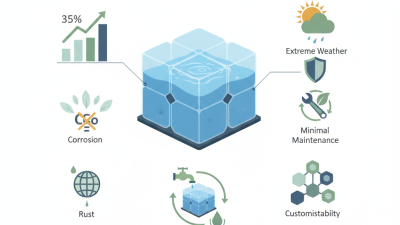
Representative planning comparison for a 100 m² roof using an 80% runoff coefficient. Tank capacity is shown as approximately 10% of calculated annual roof runoff, while overflow and maintenance provisions should be confirmed against local rainfall intensity, drainage regulations, and site conditions.
Design guidance: Provide a screened overflow routed to a safe drainage point, inspect filters and inlets at least twice per year, remove settled sediment every 2–5 years, and select materials and access arrangements that support a 20–30-year design service life.