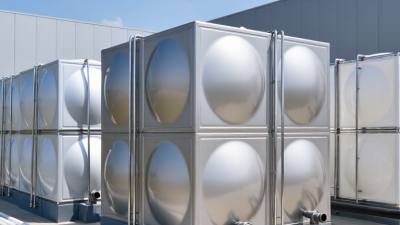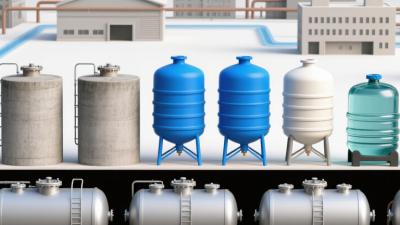
Choosing among China’s GRP water tank manufacturers takes more than comparing headline prices. Grp Water Tanks are assembled from reinforced panels, but panel quality, resin selection, fittings, and workmanship can vary between suppliers. The details matter. A tank for a school, factory, or remote site may need different capacity, access points, insulation, and water-contact specifications. Clear requirements make supplier quotations easier to compare.
This guide explores how to assess manufacturers and understand the factors behind pricing. It considers practical checks such as reviewing technical drawings, confirming panel dimensions, asking about quality-control procedures, and verifying relevant test reports. Buyers should also clarify what a quote includes: tank panels, internal supports, ladders, valves, delivery, installation, and after-sales service. Freight and site conditions can change the final cost considerably. A low quote may omit essential items, while a higher one is not automatically proof of better quality. Comparisons need context.
No single supplier is best for every project. Capacity, water use, location, schedule, and maintenance access all shape a sensible choice. Specifications can look complete on paper and still leave questions about installation. That is worth checking. By weighing documented product details against price and project needs, readers can build a more reliable shortlist of Chinese manufacturers and request quotations that are genuinely comparable.
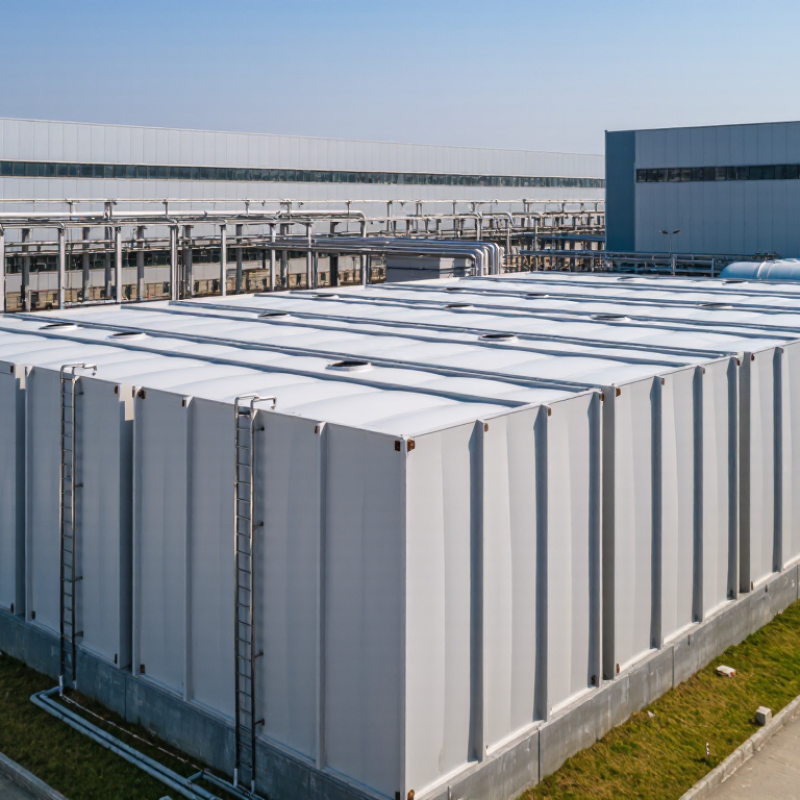
A GRP water tank combines glass fibers with a resin matrix to create strong, lightweight panels. The fibers help resist pulling forces, while the resin holds them in place and protects them from moisture. Panel thickness and fiber arrangement affect stiffness, so two tanks with similar dimensions may not perform identically. Details matter.
Panels are molded separately, then joined with bolts and sealed at the edges. This modular structure can pass through narrow access routes and be assembled on site. A level, properly supported base helps prevent uneven loading. Installers also need to check joint alignment and gasket compression; a small sealing mistake can lead to a persistent leak.
Tank specifications should match the stored water, site conditions, and required capacity. Ask manufacturers for panel details, resin and reinforcement specifications, test records, and installation guidance. Prices vary with dimensions, fittings, support structures, transport, and assembly work, so comparing headline prices alone can be misleading. One limitation is easy to overlook: modular panels simplify access, but they do not remove the need for careful engineering. A cramped site may still complicate inspection and maintenance.
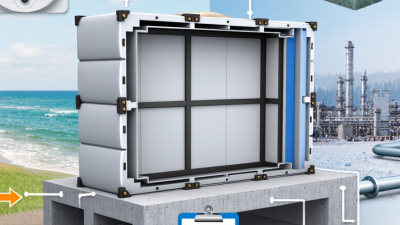
Common 1 m × 1 m GRP panels make tank dimensions easier to plan and transport. They are assembled into a larger structure, so the finished tank’s length, width, and height depend on the panel layout. A panel is only a module, not a complete design. Water depth matters: pressure is greatest near the base, and panel thickness or reinforcement may vary by position. Internal stays, where required, help control movement under load.
BS EN 13280 is a useful reference for GRP sectional tanks storing cold water. Ask for the applicable edition and design documents, including details on panel materials, joints, supports, and operating limits. A standards reference alone does not prove that a proposed tank suits every site. The foundation must be level and able to support the full tank and water weight. One detail is easy to overlook: access for inspection and cleaning can be awkward after installation. Pricing should therefore be checked against the actual panel count, fittings, stays, delivery, and installation scope. Comparing quotes can reveal gaps, though the cheapest option may not include the same components. I would recheck the layout before ordering.
Typical modular panel size: 1 m × 1 m, giving a nominal panel area of 1 m². BS EN 13280 covers the design and performance of glass-reinforced plastic cisterns; panel sizes and tank specifications should be confirmed for each design. Prices vary with capacity, specification, fittings and installation requirements.
Comparing China’s GRP tank manufacturers starts with production capacity, not a headline price. Ask for the usable volume range, panel dimensions, monthly output, and current lead time. A factory may report high annual capacity but have limited mould availability for unusual sizes. Confirm whether it can supply matching ladders, roof panels, internal stays, and access covers.
Material details shape service life. Request the resin specification, glass-fibre reinforcement details, panel thickness, and stated operating temperature. Check how seams are sealed and whether fittings suit the intended water conditions. For potable-water use, ask for relevant independent test reports and material documentation; do not rely on a brochure alone. Small details matter.
Quality comparisons should include panel inspection records, leak-test procedures, dimensional tolerances, and production-batch traceability. Ask what is inspected before packing and who handles defects after delivery. Prices are meaningful only when freight, accessories, installation support, and warranty terms are itemized. A low quote can exclude essential fittings. Even a careful checklist misses something; verify the tank drawing and site conditions before approving production.
This brand-neutral guide compares common GRP (glass-reinforced plastic) water-tank options. Capacity and configuration are project-dependent; prices are quotation-based rather than fixed market rates.
| Comparison Dimension | Small Modular Tank | Medium Modular Tank | Large Modular Tank | What to Verify with the Supplier |
|---|---|---|---|---|
| Typical capacity range | Approximately 1–10 m³ | Approximately 10–100 m³ | Approximately 100 m³ and above; final capacity depends on design and site conditions | Request the proposed length, width, height, usable volume, and panel layout. Capacity ranges are indicative, not universal product limits. |
| Common construction | Bolted, moulded GRP panels or a one-piece tank, depending on the design | Usually sectional GRP panels assembled with internal supports and external framing as specified | Sectional panels with a structural support system designed for the stated dimensions and loads | Confirm panel dimensions, joint design, internal bracing, external support, access openings, and installation method. |
| Material specification | GRP laminate; resin and reinforcement details vary by product | GRP laminate; panel thickness and reinforcement may vary by location in the tank | GRP panels and supports selected to suit the tank geometry, water depth, and installation environment | Ask for the resin type, laminate or panel specifications, material data sheets, and any corrosion or UV-resistance information relevant to the site. |
| Quality evidence | Check drawings, material documentation, workmanship records, and leak-test procedure | Check documented panel and joint inspection, assembly instructions, and leak-test procedure | Check structural calculations, manufacturing quality controls, installation requirements, and completed-tank inspection records | Request documents for the exact model and configuration. A general certificate may not establish the performance of every tank size or component. |
| Potable-water suitability | Depends on the specific materials and approvals used | Depends on the specific materials, seals, fittings, and intended application | Depends on all wetted components and the applicable requirements in the destination market | For drinking-water use, verify applicable local requirements and approval or test evidence for the exact tank materials, seals, and fittings. |
| Price information | Quotation required | Quotation required | Quotation required | Compare like-for-like written quotations. Price depends on capacity, dimensions, panel and resin specifications, supports, fittings, certification, packing, shipping, and installation scope. |
| Common cost drivers | Tank size, material specification, fittings, and whether delivery or installation is included | Panel specification, support structure, access requirements, fittings, and transport | Structural design, site access, support system, shipping volume, installation, and project-specific compliance | Ask suppliers to list inclusions and exclusions, including foundation, assembly, piping, taxes, freight, and commissioning. |
| Best suited to | Smaller storage requirements and locations where a compact solution is appropriate | Building, commercial, and industrial storage projects with a defined installation space | Higher-volume projects requiring a sectional system and project-specific structural planning | Confirm operating conditions, installation space, water temperature, exposure, maintenance access, and required service life. |
Price comparison tip: Request itemized quotations using the same usable capacity, tank dimensions, material specification, accessories, delivery terms, and installation scope. Do not treat indicative capacity bands as a substitute for a supplier’s technical proposal or project-specific price.
GRP tank prices in China depend heavily on capacity, panel specifications, and project requirements. A 10-cubic-meter tank usually needs fewer panels and less reinforcement than a 100-cubic-meter unit. However, capacity alone does not determine the final quote. Water pressure, access openings, insulation, and site conditions can all change the specification. Ask suppliers to list panel thickness, fittings, and included accessories separately. Then you can compare quotations more fairly.
Installation can add a substantial share to the total cost. A rooftop project may require lifting equipment, structural checks, and careful panel assembly in a tight space. Ground-level installation may be simpler, but a concrete foundation must be level and ready before delivery. Transport distance and local labor rates also matter. One detail is easy to overlook: delays caused by an unfinished foundation can increase labor costs. Estimates are not always perfectly comparable, so confirm what each one excludes.
Tips: Provide the required capacity, installation location, access dimensions, and water temperature when requesting a quote. Ask whether assembly, sealing, testing, and transport are included. Check that the foundation can support the filled tank, not just the empty panels. A site visit may help, though it can add time. Weigh that trade-off.
Supplier claims deserve more than a polished brochure. Ask which standards the GRP water tank meets, and whether they cover design, materials, and drinking-water contact. A certificate should identify the tested product and its scope. Check its issuer, date, and validity; a document for one resin or panel may not cover the complete tank. Paper is not proof. I would also compare the proposed tank’s panel thickness, supports, and connection details with the drawings. Small differences can affect performance.
Water-tightness testing should be described in writing before purchase. Ask how the tank is filled, how long it remains full, and how inspectors check seams, flanges, and the base. Request dated records, test conditions, and clear acceptance criteria. A brief visual check may miss a slow leak. Details matter. Warranty terms need the same scrutiny: confirm the coverage period, what defects qualify, and who pays for transport, removal, or repair. Check exclusions for installation errors, poor maintenance, and unsuitable water conditions. These terms can vary. If a claim sounds broad, ask for the exact clause and a sample inspection report; I would not treat a verbal promise as settled evidence.