10 Best Water Tanks for Commercial and Industrial Use
Commercial and industrial facilities depend on stored water for production, cleaning, fire protection, and daily operations. A well-chosen Water Tank can steady supply during peak demand and reduce disruption when incoming water is limited. But capacity alone does not determine performance. Material, installation space, water quality, maintenance access, and local climate all matter.
The United Nations World Water Development Report 2019 found that global water demand had risen by about 1% annually since the 1980s. It projected a further 20–30% increase by 2050. These figures describe broad demand trends, not a direct forecast for every facility. Still, they underline why storage planning deserves careful attention. A tank that looks adequate on paper may fall short during a production surge or a prolonged supply interruption.
This guide compares 10 water tanks for commercial and industrial use, including steel, concrete, fiberglass, and polyethylene options. We consider practical factors such as durability, capacity range, corrosion resistance, installation needs, and upkeep. A rooftop tank serving a hotel has different demands from a large ground-level tank at a processing plant. Details matter. Product specifications should be checked against actual site requirements, and qualified professionals should review design and installation choices. No shortlist can replace that work. Even a carefully researched ranking has limits, because operating conditions vary widely.
Commercial Water Tank Types: 10 Designs by Material and Configuration
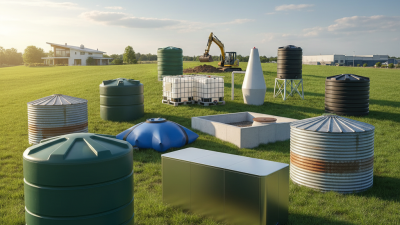
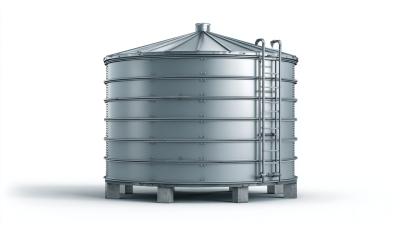
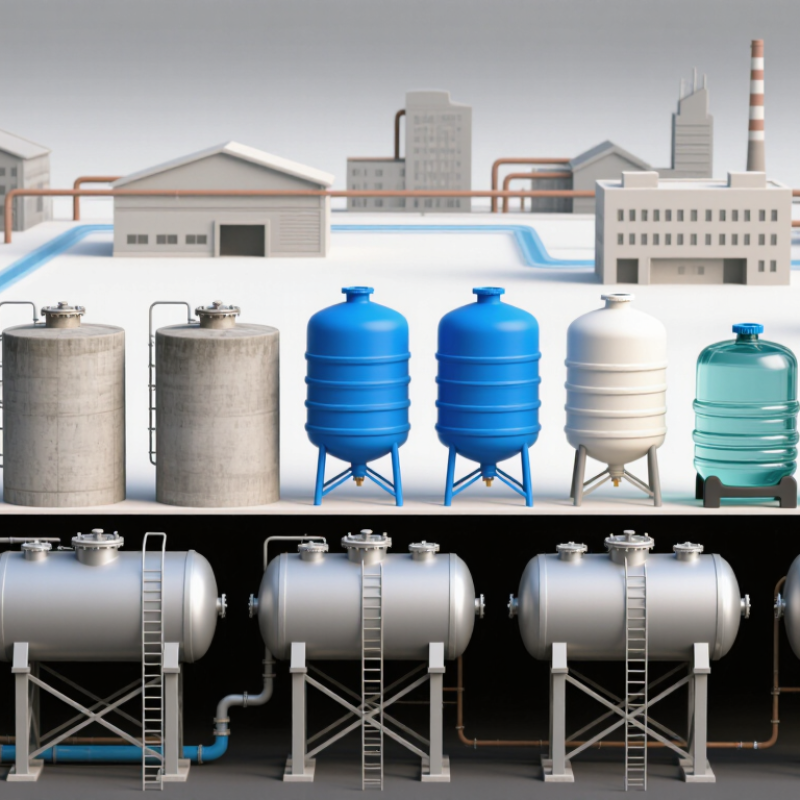
Commercial water tanks differ in how they handle corrosion, space, access, and changing demand. Bolted steel tanks arrive in panels, making transport and future expansion easier. Glass-fused or epoxy-coated interiors help protect the steel, but coating condition still needs inspection. Welded carbon-steel tanks suit fixed installations with high capacity needs. They require careful site planning and qualified fabrication. Stainless-steel tanks resist corrosion well, though their higher cost may not suit every water system.
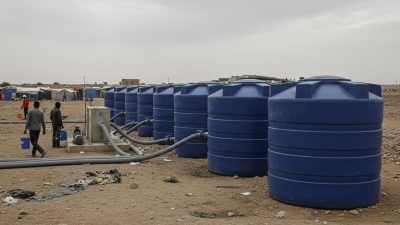
Reinforced-concrete tanks offer strength and can be built underground or partly buried. Check the lining and joints, where leakage can begin. Fiberglass-reinforced plastic tanks are relatively light and resist many corrosive environments, but capacity and temperature limits depend on the design. High-density polyethylene tanks are useful for smaller storage volumes and straightforward installation. They can deform under unsuitable support, so the base matters. Sectional panel tanks fit tight access routes and constrained rooms. Their many joints need proper assembly and periodic checks.
Configuration matters as much as material. Elevated tanks use gravity to provide pressure, but their supports and foundations need engineering review. Underground tanks save surface space; drainage, groundwater, and access for maintenance deserve attention. Flexible bladder tanks can provide temporary or space-conscious storage, though they need protection from punctures and a suitable enclosure. No option is perfect. I would verify water quality, demand, site conditions, and maintenance access before choosing; capacity alone can be misleading.
Capacity Planning: Daily Demand, Peak Flow, and Fire-Reserve Volume
Sizing a commercial water tank starts with measured daily demand, not a guess based on floor area. Review meter readings across ordinary shifts, cleaning cycles, and seasonal changes. Then identify which uses can run at the same time: process lines, washdown stations, cooling equipment, and staff facilities may overlap. Averages help estimate total consumption, but they can hide brief, heavy draws. Small details matter.
Peak flow affects outlets, pumps, and usable storage. Record the highest likely demand over a defined period, then check whether the tank and delivery system can supply it without pressure dropping too far. Include refill rate, because a tank that empties faster than it recovers may leave operations exposed. Fire reserve should be calculated separately with qualified fire-protection guidance and applicable site requirements. Keep that volume unavailable for routine use. That gap matters.
A practical capacity model therefore separates daily operating volume, peak-flow needs, and protected fire storage. Add only a justified contingency allowance; oversized tanks can mean unnecessary cost, stagnant water, and harder maintenance. The estimate still has limits. Production schedules change, and one unusual shift can distort a short meter survey. Recheck assumptions against operating records before choosing a tank.
Commercial and Industrial Water Tank Capacity Planning
Illustrative planning profiles compare average daily demand, peak-day demand, fire-reserve volume, and peak-hour flow across three facility types.
Volumes are shown in cubic metres (m³); peak-hour flow is shown in cubic metres per hour (m³/h) on the right axis. Peak-day demand assumes a 1.25 planning factor. These illustrative estimates are not design values: confirm actual demand, required fire flow and reserve duration with site data and applicable local requirements.
Potable-Water Safety: NSF/ANSI/CAN 61 Material Requirements
For commercial and industrial tanks, potable-water safety depends on every wetted surface, not just the tank shell. NSF/ANSI/CAN 61 evaluates the health effects of materials and components that contact drinking water. Testing measures substances that may migrate into water under defined conditions. It does not certify a tank’s structural strength or guarantee that every installation is suitable.
Check the certification scope for the exact tank configuration, including liners, coatings, gaskets, fittings, and temperature limits. A compliant material in one use may not qualify for another. Small details matter. A gasket or repair coating can change what touches the water, so confirm that replacement parts are included in the applicable certification. The standard is useful, but it cannot replace sound installation and maintenance.
The scale of infrastructure risks is real. The U.S. Environmental Protection Agency’s 2023 Seventh Drinking Water Infrastructure Needs Survey and Assessment estimated 9.2 million lead service lines nationwide. That figure is not a tank-material test, but it underscores why every water-contact component deserves scrutiny. Keep supplier documentation and verify certification against the tank’s intended use. There is still a judgment call: operating conditions and water chemistry can vary, and paperwork alone will not reveal every weakness.
Structural Design: AWWA D100-21, Wind Loads, and Seismic Loads
A commercial water tank must resist more than the weight of stored water. AWWA D100-21 sets design and construction requirements for welded steel tanks. Wind and seismic criteria should also reflect the site, tank geometry, foundation, and operating water level. ASCE 7-22 provides the framework for calculating these loads. A gust can create roof uplift and shell pressure; earthquake motion can cause water sloshing and substantial forces at the tank base. Small details matter.
The 2023 USGS National Seismic Hazard Model indicates that nearly 75% of the United States could experience damaging earthquake shaking. That figure makes site-specific seismic review important, even away from familiar fault zones. Engineers should check anchorage, foundation response, shell stability, and connections under applicable load combinations. Wind exposure, nearby terrain, and tank height also affect design. A standard is a starting point, not a substitute for engineering judgment.
Tips: Confirm local wind speed, seismic site class, and required risk category before comparing tanks. Ask for calculations showing design water level, anchorage, and foundation assumptions. A drawing may look reassuring; assumptions deserve a closer look.
Comparing 10 Tank Options by Capacity, Maintenance, and Service Life
Capacity is only the first filter. Vertical welded-steel and bolted-steel tanks suit large fixed reserves, but coatings and joint inspections matter. Stainless-steel tanks resist many forms of corrosion, though water chemistry still matters. Concrete tanks offer substantial capacity and thermal stability; inspect liners and cracks. Fiberglass-reinforced plastic resists corrosion, while polyethylene and corrugated-steel tanks can suit smaller or modular installations. Elevated steel tanks add pressure head, but structural access complicates maintenance. Ground-level steel tanks simplify access. Pillow tanks deploy quickly, though abrasion and punctures limit service life. No option wins everywhere.
Compare ten choices against peak demand, footprint, access, and water quality—not purchase price alone. The U.S. EPA’s 2023 Drinking Water Infrastructure Needs Survey estimated $625 billion in drinking-water infrastructure needs over 20 years. That scale makes lifecycle planning hard to ignore. NACE International’s 2016 IMPACT study estimated corrosion costs at $2.5 trillion annually worldwide, or 3.4% of global GDP; it is broad industry data, not a tank-specific forecast. Still, it underscores the value of coatings, inspections, and documented repairs. AWWA standards D100, D103, D110, and D120 provide design references for several steel, concrete, and fiberglass tank types. Actual service life varies with design, installation, water chemistry, and maintenance. Sometimes the overlooked factor is access: a tank that is hard to inspect may age poorly. A spreadsheet won’t catch every site-specific problem.