Leave Your Message
Choosing the best Overhead Tanks from China requires more than comparing prices and product photos. Tank material, welding quality, wall thickness, and manufacturing consistency can affect service life. A reliable supplier should explain these details clearly, not hide them behind attractive marketing.
This guide examines common Chinese tank options, including stainless steel, polyethylene, fiberglass, and sectional models. Each design suits different buildings, climates, and water uses. Stainless steel may offer strong hygiene performance, while polyethylene can reduce weight and installation effort. Fiberglass tanks may perform well in specific environments, but surface damage deserves careful inspection. Small details matter.
Supplier experience is equally important. Look for factory records, documented quality procedures, traceable materials, and practical installation guidance. Independent inspections, production samples, and clear warranty terms can provide stronger evidence than online ratings. Ask how the tank handles ultraviolet exposure, temperature changes, internal pressure, and routine cleaning. These questions often reveal the difference between a dependable manufacturer and a simple trading company.
The word “best” remains subjective. A rooftop tank for a small residence should not be judged like a large commercial water system. Capacity calculations, structural support, water quality requirements, and local installation rules must guide the final choice. Even experienced buyers can overlook maintenance access or transport damage. I have found that a lower purchase price can become expensive after repairs, leakage, or difficult replacement.
This overview offers a practical framework for comparing Chinese suppliers and tank designs. It focuses on evidence, realistic performance, and responsible purchasing decisions. Readers should still verify current certifications and specifications before placing an order. Supplier claims need checking. That step protects both the project and its users.
Which Are the Best Overhead Tanks from China?
Types of Overhead Tanks Manufactured in China
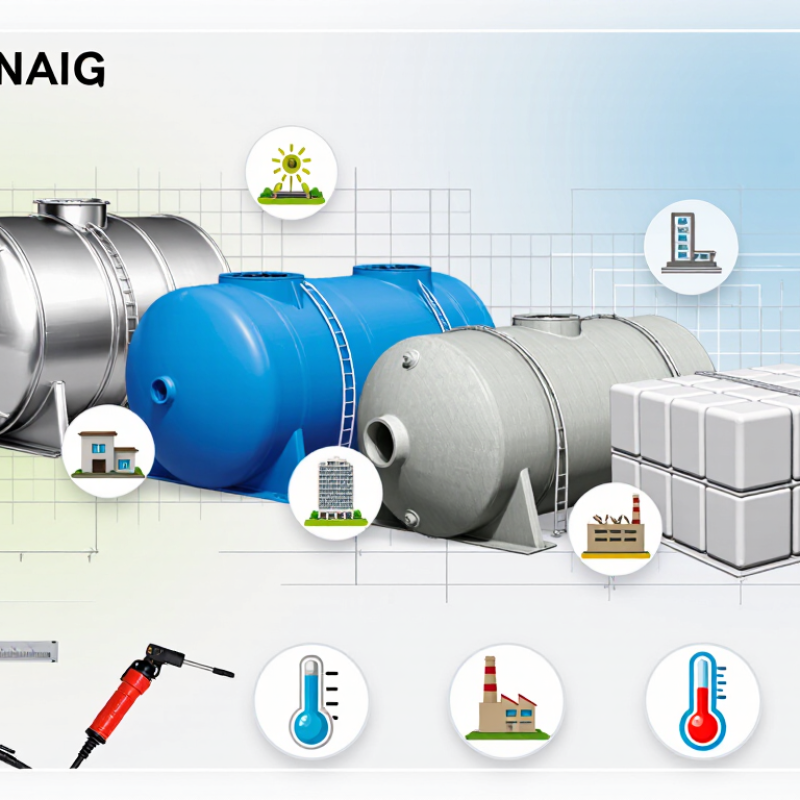
China’s manufacturers commonly produce several overhead tank types. Each type solves a different engineering problem. Rotationally molded HDPE tanks are lightweight, corrosion-resistant, and easy to transport. They suit homes, farms, and small commercial buildings. Sectional GRP or FRP tanks offer modular capacity and simpler rooftop delivery. Their panels can pass through narrow stairwells. Pressed galvanized-steel tanks provide strong structural performance for larger installations. Stainless-steel tanks support hygienic water storage, especially where cleaning frequency matters. Concrete tanks remain useful for heavy-duty projects, but installation takes longer. The boundary is not always neat.
Demand also reflects a wider water challenge. The WHO/UNICEF Joint Monitoring Programme 2023 report states that 2.2 billion people lacked safely managed drinking water in 2022. UN-Water’s World Water Development Report 2024 notes that agriculture accounts for roughly 70% of global freshwater withdrawals. This makes tank material, usable volume, insulation, and maintenance access practical concerns. In field specifications, I would not select the largest tank automatically. Oversized tanks can increase stagnation risk and structural loads. A smaller, well-managed system may perform better.
Tips: Ask for wall-thickness data, food-contact documentation, welding or molding records, and load calculations. Confirm the tank’s design for local wind, seismic, temperature, and roof conditions. Request factory inspection photos and a water-quality test plan. Certificates alone are not enough. 马会
| Tank Type | Common Materials | Typical Capacity Range | Typical Installation | Best Use | Main Advantages | Key Selection Considerations |
|---|---|---|---|---|---|---|
| Rotomolded Plastic Tank | Linear polyethylene or cross-linked polyethylene | 500–20,000 L | Residential roofs, concrete platforms, steel towers | Domestic water storage, rainwater collection, agricultural use | Lightweight Corrosion-resistant Low maintenance | Check UV protection, wall thickness, food-contact suitability, outlet configuration, and support requirements. |
| GRP/FRP Panel Tank | Glass-fiber-reinforced plastic panels with resin coating | 1,000–1,000,000 L | Rooftops, service platforms, commercial and industrial sites | Large-volume potable water, fire water, and process water storage | Modular construction Large capacity Easy site assembly | Confirm panel grade, internal liner, sealing method, structural frame, access ladder, and hygiene certification. |
| Stainless Steel Panel Tank | Stainless steel panels, commonly grades 304 or 316 | 1,000–2,000,000 L | Commercial buildings, hospitals, factories, and public facilities | Hygienic potable water, purified water, and demanding industrial applications | High hygiene Durable Good appearance | Choose the steel grade according to water chemistry, verify weld quality, insulation, roof design, and corrosion protection. |
| Hot-Dip Galvanized Steel Tank | Galvanized carbon steel panels with protective lining | 5,000–2,000,000 L | Industrial facilities, water treatment plants, and elevated structures | Fire water, utility water, irrigation, and general industrial storage | Strong structure Modular Suitable for large volumes | Inspect galvanizing thickness, liner compatibility, bolt protection, foundation loading, and local corrosion conditions. |
| Epoxy-Coated Steel Tank | Carbon steel with factory-applied or site-applied epoxy coating | 10,000–5,000,000 L | Industrial sites, municipal systems, and fire-protection installations | Large-scale water storage where structural strength is important | High strength Flexible capacity Repairable coating | Verify coating thickness, holiday testing, potable-water approval where needed, bolt sealing, and maintenance access. |
| Welded Steel Tank | Carbon steel or stainless steel with welded seams | 50,000–10,000,000+ L | Industrial compounds, municipal infrastructure, and high-capacity tower systems | Very large fire-water, process-water, and utility-water storage | High structural capacity Custom engineering Large volume | Review welding procedures, non-destructive testing, coating system, seismic design, foundation engineering, and site assembly requirements. |
| Concrete Overhead Tank | Reinforced concrete with waterproof internal treatment | 10,000–1,000,000+ L | Building roofs, water towers, and permanent civil structures | Long-term municipal, residential, and institutional water storage | Rigid structure Long service potential Good thermal stability | Consider structural dead load, waterproofing, cracking control, inspection access, cleaning, and seismic conditions. |
| Flexible Pillow Tank | Reinforced PVC, TPU, or coated fabric membrane | 1,000–500,000 L | Temporary platforms, low-rise sites, and protected outdoor areas | Emergency supply, agricultural water, and temporary storage | Fast deployment Lightweight Portable | It generally requires a level base rather than a tall tower; protect the membrane from sharp objects, heat, abrasion, and excessive pressure. |
| Insulated Overhead Tank | Plastic, GRP, steel, or stainless steel with thermal insulation | 500–2,000,000 L | Cold climates, hot climates, rooftops, and temperature-sensitive facilities | Potable water protection, process water, and systems requiring temperature control | Reduced temperature fluctuation Lower condensation risk Energy-saving potential | Specify insulation thickness, vapor barrier, exterior cladding, access-panel design, and local weather exposure. |
Note: Capacity ranges are typical market ranges rather than fixed limits. The appropriate overhead tank depends on water quality, required volume, roof or tower loading, climate, local building codes, hygiene requirements, and the available foundation.