Leave Your Message
What Is a Stainless Water Tank? The question sounds simple, but the answer involves material science, water hygiene, engineering, and daily maintenance. A Stainless Water Tank is a storage vessel made primarily from stainless steel, often grades 304 or 316. Its smooth interior helps reduce rust, staining, and surface buildup. It can store drinking water, process water, rainwater, or heated water, depending on its design and certification.
Dr. Joseph Cotruvo, a recognized drinking-water quality expert, has stated, “Water is a good solvent.” That short sentence explains why tank material matters. Water can interact with metals, seals, coatings, and contaminants over time. Stainless steel offers strong corrosion resistance, but it is not magic. Poor welding, trapped sediment, incorrect cleaning chemicals, or unsuitable fittings can still create problems. The details matter.
A well-designed tank usually includes sanitary welds, a secure lid, proper ventilation, and accessible inspection points. Imagine a clean tank interior under bright light, with no rough corners where sediment can hide. That detail affects maintenance. Grade selection also deserves careful thought. Stainless steel 316 may perform better in salty or aggressive environments, while 304 can suit many ordinary installations. However, water chemistry should guide the decision.
This guide explains how a Stainless Water Tank works, where it fits, and what buyers should examine. It also considers capacity, insulation, installation, cleaning, and service life. Some assumptions may need reconsideration. A shiny surface alone does not prove safe storage. Evidence, workmanship, and regular inspection matter more.
What Is a Stainless Water Tank?
Definition and Core Characteristics of a Stainless Water Tank
A stainless water tank is a storage vessel made from corrosion-resistant stainless steel. It holds drinking water, process water, or treated water in homes, buildings, and industrial facilities. Unlike ordinary steel, stainless steel forms a protective chromium-rich surface that helps resist rust and staining. This protection is useful, but it is not unlimited.
Common tank materials include stainless steel grades selected for water chemistry and service conditions. Grade 304 often suits general indoor applications. Grade 316 can offer better resistance where chlorides or coastal air are present. The correct choice depends on testing, temperature, cleaning methods, and local water requirements. A confident answer without these details may be incomplete.
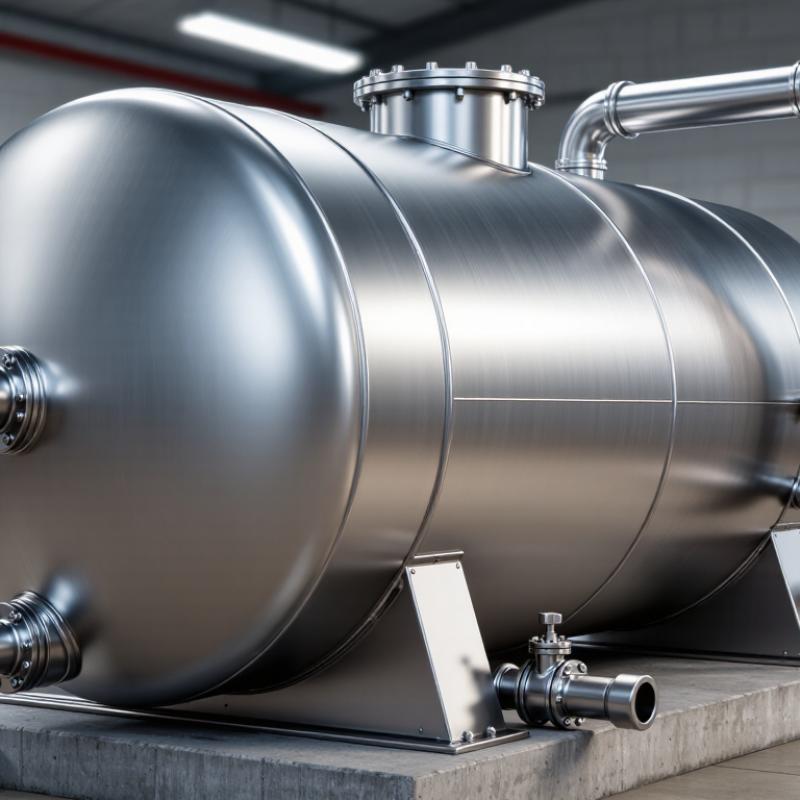
Several construction features affect performance. Smooth internal surfaces reduce places where sediment and microbes can collect. Properly finished welds matter greatly. Rough seams can trap residue and complicate cleaning. Tanks also need stable supports, secure access covers, drain points, and suitable ventilation. Insulation may help control temperature and condensation. In practical inspections, small design details often cause the largest maintenance problems.
Stainless steel does not guarantee perfect hygiene. Poor cleaning, stagnant water, or damaged welds can still create risks. Regular inspection should check seams, valves, seals, and internal deposits. Water quality testing remains important, especially when the tank serves drinking-water systems. A well-designed tank is durable, cleanable, and traceable, yet its reliability depends on installation and daily management.
| Data Dimension | Core Characteristic | Typical Data or Standard Information | Practical Meaning for a Water Tank |
|---|---|---|---|
| Definition | A storage vessel manufactured mainly from stainless steel for holding water. | Common applications include potable water, process water, rainwater, and hot-water storage. | The tank provides a durable, cleanable, and corrosion-resistant enclosure for water storage. |
| Basic Material Definition | Stainless steel is an iron-based alloy containing sufficient chromium to form a protective passive surface film. | The commonly accepted minimum chromium content is approximately 10.5% by mass. | The chromium-rich oxide film helps reduce general corrosion when the surface is properly selected, fabricated, and maintained. |
| Common Stainless Grades | Austenitic stainless steels are widely used for water tanks. | Grade 304 is common for general indoor or low-chloride water service; Grade 316 or 316L offers improved resistance to chlorides due to molybdenum. | Material selection should consider chloride concentration, temperature, cleaning chemicals, water chemistry, and applicable regulations. |
| Corrosion Resistance | High resistance to rust and many common water-related corrosive conditions. | Resistance is not absolute; high chloride levels, stagnant water, crevices, deposits, and poor weld finishing can cause localized corrosion. | A suitable grade and smooth, properly finished surface are essential for long service life. |
| Hygiene and Cleanability | Non-porous metal surfaces can be cleaned and sanitized effectively. | Smooth internal surfaces reduce locations where sediment and microorganisms can accumulate. | The tank design should minimize dead zones, sharp internal projections, and difficult-to-clean joints. |
| Typical Surface Finish | The internal finish is selected according to hygiene, cleaning, and corrosion-control requirements. | Common finishes include mill finish, brushed finish, and polished finish; roughness requirements vary by application. | A smoother and properly passivated surface is generally easier to inspect and clean. |
| Mechanical Strength | Strength depends on the alloy grade, plate or sheet thickness, tank geometry, supports, and design pressure. | Atmospheric tanks are designed mainly for hydrostatic head and external loads; pressurized tanks require specific pressure-vessel design. | Thickness and reinforcement should be calculated rather than selected only by tank capacity. |
| Density | Stainless steel is a relatively dense structural material. | Typical austenitic stainless steel density is approximately 7.9–8.0 g/cm³. | Compared with plastic tanks, stainless tanks may be heavier but can provide greater rigidity and durability. |
| Temperature Performance | Stainless steel retains useful mechanical performance across a broad temperature range. | For 304-type stainless steel, thermal expansion is approximately 17.2 × 10⁻⁶/°C near room temperature. | Thermal expansion, insulation, and support movement should be considered in hot-water applications. |
| Welded Construction | Many stainless water tanks are assembled using welded sheets, plates, nozzles, and structural components. | Weld quality, heat control, post-weld cleaning, and passivation affect corrosion resistance. | Poorly finished welds can become preferred sites for staining or localized corrosion. |
| Water Capacity | Capacity is determined by the tank’s internal volume. | Typical systems range from small domestic tanks to large modular or site-assembled tanks; 1,000 liters equals 1 cubic meter. | The required capacity depends on demand, storage duration, water supply reliability, and available space. |
| Maintenance Requirements | Maintenance is generally moderate when the tank is correctly designed and operated. | Periodic inspection, sediment removal, leak checks, cleaning, and verification of fittings are recommended. | Avoid carbon-steel tools, chloride-contaminated cleaners, and harsh abrasives that may damage or contaminate the surface. |
| Potable Water Suitability | Stainless steel can be suitable for drinking-water storage when the material and complete tank system meet local requirements. | Compliance may involve material composition, fabrication, cleaning, disinfecting, and applicable drinking-water regulations. | “Stainless steel” alone does not automatically certify a tank for potable water use. |
| Main Advantages | Durability, corrosion resistance, hygiene, recyclability, and a relatively low risk of surface scaling compared with some materials. | Performance depends on grade, design, fabrication quality, water chemistry, and operating conditions. | These characteristics make stainless tanks suitable for domestic, commercial, industrial, and institutional water storage. |
| Main Limitations | Higher initial material cost and sensitivity to unsuitable water chemistry or fabrication practices. | Chloride-induced pitting, crevice corrosion, galvanic contact, and contamination from iron particles are possible risks. | Correct grade selection, hygienic design, quality welding, and routine inspection are necessary for reliable service. |