Leave Your Message

Best Standing Water Tank Options for Global Buyers?

In the evolving landscape of water storage solutions, the Standing Water Tank industry has gained significant attention. According to Dr. Emily Carter, a renowned expert in water management systems, "Choosing the right Standing Water Tank is crucial for efficient water storage." Her insights reflect the growing need for reliable options among global buyers.

Standing Water Tanks are essential in various applications, from residential use to agricultural settings. Their design allows for effective water conservation and accessibility. However, not all tanks are created equal. Factors such as material, capacity, and durability can profoundly affect performance. Buyers must consider these elements to make an informed decision.

Though the market offers numerous choices, some products may disappoint. It's vital to research before purchasing. Experts like Dr. Carter emphasize the importance of evaluating options critically. Selecting the ideal Standing Water Tank can significantly enhance resource management in any context. In this guide, we will explore the best options available, aiding buyers in their quest for quality and reliability.
Best Standing Water Tank Options for Global Buyers?

Overview of Standing Water Tanks and Their Importance

Best Standing Water Tank Options for Global Buyers?

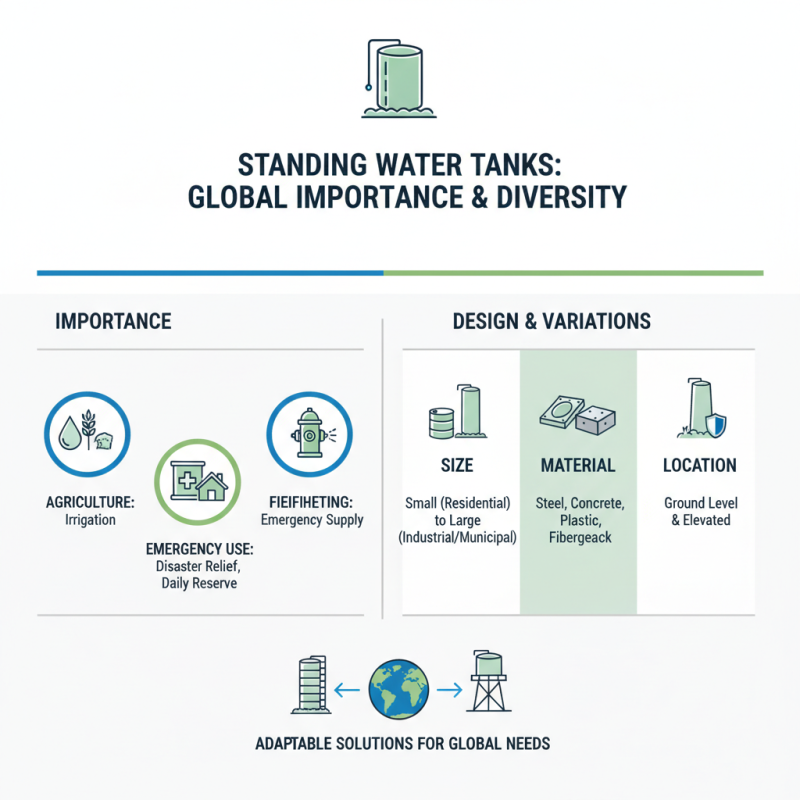
Standing water tanks are crucial for various applications. They store water and ensure its availability for agriculture, firefighting, and emergency use. Their design and construction can vary significantly. This diversity meets the different needs of global buyers. Considerations include size, material, and location.

Proper maintenance is essential. Many tanks suffer from sediment buildup and leaks. Regular inspections can help identify these issues. However, finding the resources for proper upkeep is not always easy. Some may overlook the importance of these inspections, leading to potential future problems.

The significance of standing water tanks goes beyond mere storage. They support sustainable water management practices. Communities that invest in these systems often experience enhanced resilience. Yet, faceless decision-making might ignore unique local contexts. Each region has its specific environmental challenges. Adaptation is key, but it is often slow.
Types of Standing Water Tanks Available for Global Markets

Best Standing Water Tank Options for Global Buyers?

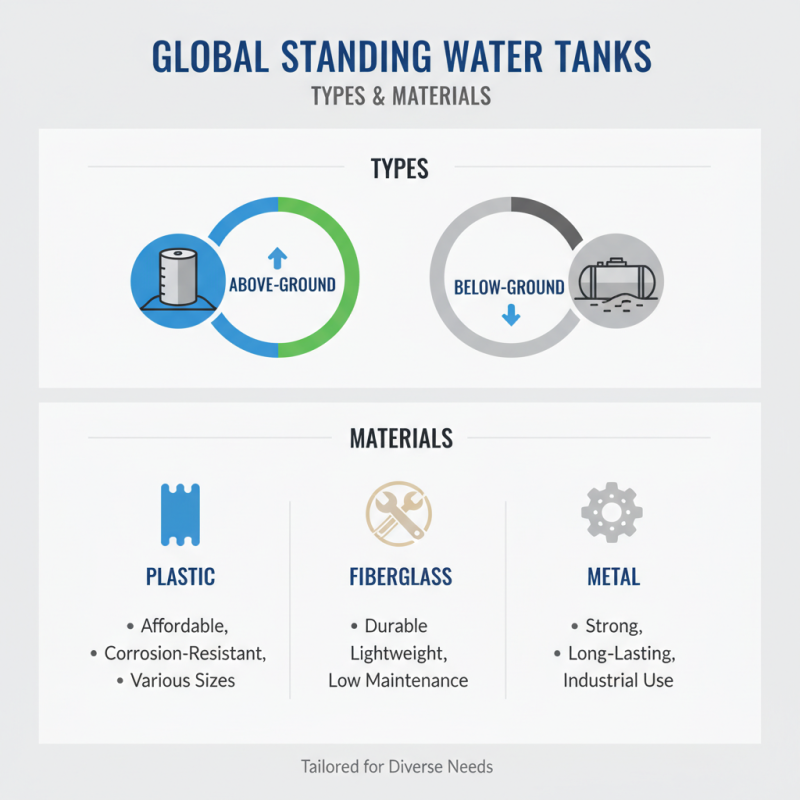
Standing water tanks come in various types, catering to the diverse needs of global buyers. These tanks vary in size, material, and design. Common types include above-ground tanks, which are easy to install. They can be made from plastic, fiberglass, or metal. Each material has its own advantages and limitations, affecting durability and maintenance needs.

Underground tanks also offer unique benefits. They are less visible and can save space. However, installation can be complex. Environmental factors, such as soil type and water table levels, must be considered. Some regions favor portable tanks, which can be moved as needed. These can be beneficial for temporary storage solutions.

Buyers should reflect on their specific requirements. It's essential to assess local regulations regarding water storage. Understanding your environment is critical, too. Each tank type has its own challenges. For instance, while above-ground tanks are convenient, they may be more susceptible to weather influences.

Key Features to Consider When Choosing a Standing Water Tank

When selecting a standing water tank, key features are essential for global buyers. Capacity is a primary consideration. According to the Global Water Tank Market Report, the demand for tanks with a capacity exceeding 5,000 liters is increasing. This capacity supports larger households and agricultural needs. Assessing the material is also crucial. Tanks made from polyethylene or fiberglass offer durability and resistance to corrosion, which can enhance longevity.

Another important factor is portability. Many users prefer light tanks for easy transportation. However, this often compromises stability. An overlooked detail is the tank’s design. A well-designed tank should have an efficient drainage system. Poor drainage can lead to water stagnation. This stagnation promotes algae growth, creating health hazards. Furthermore, efficient insulation can help maintain temperature. Many users undervalue this feature, yet it significantly affects water quality.

Finally, compatibility with existing plumbing systems is vital. Some buyers may underestimate this aspect. Incorrect fittings can lead to leaks or system failures. Regular maintenance is also a consideration, as it can prolong the tank's life. Neglecting upkeep may lead to expensive replacements. Buyers should weigh these factors meticulously before making a choice.

Comparative Analysis of Top Standing Water Tank Brands

When selecting a standing water tank, various factors come into play, including capacity, durability, and material. Data from industry reports indicate that high-density polyethylene (HDPE) tanks offer the best resistance to UV rays and chemicals. Tanks made from this material can last over 25 years without significant degradation, which can be crucial for long-term water storage solutions.

Another key consideration is the tank's size and shape. Over 70% of consumers prefer cylindrical tanks for their efficiency in water distribution. However, space constraints can lead to a preference for square tanks. It’s important to assess both your available space and intended use before making a choice.

Tip: Always check for industry certifications. Approved tanks typically meet safety standards, ensuring cleaner water and minimizing risks.

Assessing the cost vs. longevity is also essential. Some cheaper options may not last long, leading to higher replacement costs. It’s a common mistake to choose based on price alone without considering durability and performance, which can result in disappointment.

Tip: Consider long-term use and maintenance costs when selecting a model. Investing slightly more at first can yield savings over time.

Comparison of Water Tank Capacities and Prices

Installation and Maintenance Tips for Standing Water Tanks

When considering standing water tanks, proper installation and maintenance are key. Choosing the right location for your tank is crucial. It should be level, stable, and away from heavy traffic. Ensure there is adequate access for maintenance and repairs.

Regular inspections are essential. Examine the tank for leaks, rust, or any signs of wear. Clean the tank periodically to prevent algae growth. A simple soap and water mix can do wonders. Neglecting these tasks can lead to more serious issues later on.

Water quality is also important. Test for contaminants regularly. This can prevent health problems for your family. Remember that even well-maintained tanks can face unexpected challenges. Be prepared to address issues as they arise. Staying informed helps in making smart decisions.

Best Standing Water Tank Options for Global Buyers

Tank Material Capacity (Liters) Installation Difficulty Maintenance Frequency Life Expectancy (Years)
Polyethylene 500 Easy Annual 15-20
Fiberglass 1000 Medium Every 2 years 20-30
Steel 2000 Hard Every 5 years 30-50
Concrete 5000 Very Hard Every 10 years 50+