Leave Your Message

How to Choose the Best Drinking Water Tank?

Choosing the right Drinking Water Tank affects water safety, taste, maintenance, and long-term operating costs. The decision is not simply about capacity. Material quality, tank shape, installation conditions, cleaning access, and certification all deserve careful attention.

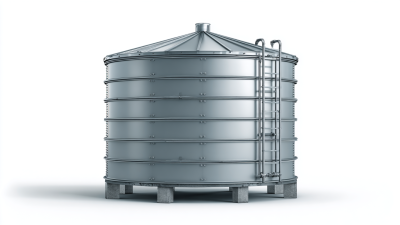
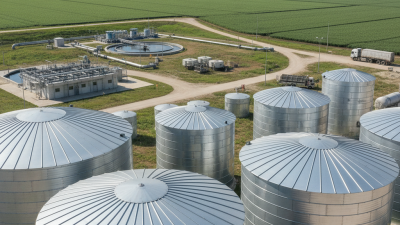
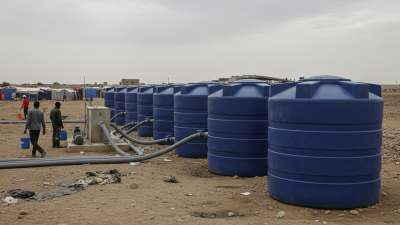
Dr. Peter H. Gleick, a leading drinking-water expert, has often emphasized, “Water is a human right.” His statement reminds buyers that storage equipment must protect water, not merely contain it. A suitable Drinking Water Tank should use a certified potable-water material, resist corrosion, and prevent light from encouraging algae growth. Polyethylene tanks can suit many homes and farms because they are lightweight and easy to install. Stainless steel may offer stronger durability, but it usually costs more. Concrete tanks can provide large capacity, although their surfaces require careful sealing and inspection.

Look closely at the details. A 5,000-liter tank needs a stable base, safe inlet design, overflow protection, and a drain that supports cleaning. A narrow inspection hatch may reduce cost, but it can make maintenance awkward. That matters. Ask for test reports, warranty terms, operating temperature limits, and replacement-part availability. Do not trust a glossy product photo alone.

Local water quality also changes the choice. Hard water, high summer temperatures, and frequent power interruptions may expose weaknesses quickly. Even experienced buyers can overlook installation space and access for delivery. A tank that fits the specification sheet may fail in a real yard. This guide examines these practical factors, helping readers choose a Drinking Water Tank with clearer evidence and fewer expensive surprises.
How to Choose the Best Drinking Water Tank?

Define Potable-Water Needs: Calculate Daily Use and 24–48-Hour Storage

How to Choose the Best Drinking Water Tank?

Define Potable-Water Needs: Calculate Daily Use and 24–48-Hour Storage

A practical calculation begins with people, not tank size. Count regular occupants, visitors, and seasonal workers. Estimate drinking, cooking, handwashing, and basic food preparation separately. A useful planning figure is 50–100 liters per person daily, depending on climate and habits. Hot weather increases drinking demand. Frequent cooking increases cleaning demand.

Multiply daily use by the number of people. Then add a safety margin of 15–25 percent. For example, four people using 80 liters each need 320 liters daily. A 24-hour reserve should hold about 400 liters after adjustment. For stronger resilience, choose 48-hour storage, or approximately 800 liters in this example. The first estimate is rarely perfect. Real life is messier.

Check the tank’s usable capacity, not just its advertised volume. Internal fittings, sediment space, and overflow limits can reduce available water. Select a tank made for potable water, with a sealed lid and smooth, cleanable surfaces. Place it away from chemicals, fuel, direct contamination, and excessive heat. A stable base prevents stress and distortion. Inspect the inlet, outlet, vents, and access cover regularly. Replace damaged seals promptly. Local health and plumbing requirements still matter, so confirm them with a qualified installer. A larger tank is not automatically better. Stagnant water can become a quality concern when storage greatly exceeds actual demand.

Compare Tank Materials: NSF/ANSI/CAN 61 Approval and 304/316 Stainless Steel

How to Choose the Best Drinking Water Tank?

Tank material matters, but certification matters more. NSF/ANSI/CAN 61 evaluates whether drinking-water components release harmful contaminants. It covers extraction testing, production controls, and chemical exposure conditions. The standard applies to finished tanks, coatings, liners, and fittings. A stainless-steel label alone proves little.

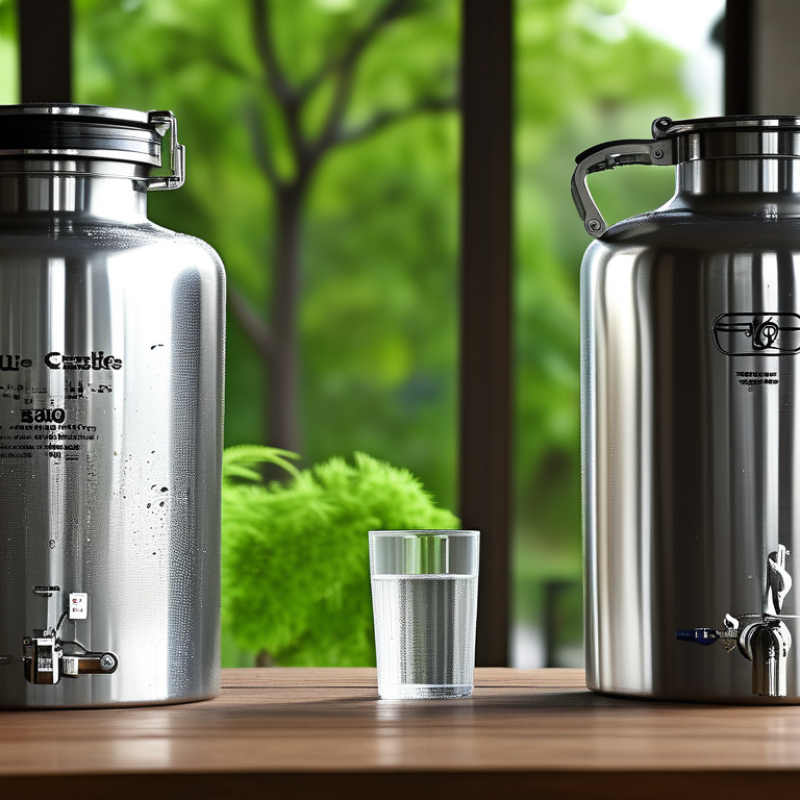
304 stainless steel is widely used for indoor potable-water tanks. It typically contains about 18% chromium and 8% nickel, according to International Stainless Steel Forum technical data. It offers good corrosion resistance in ordinary water. However, high chloride levels can cause pitting. Water chemistry changes the decision.

316 stainless steel adds molybdenum, commonly around 2–3%. This improves resistance to chloride-rich water and coastal humidity. The United States Geological Survey reports that groundwater quality varies substantially by region, including salinity and mineral content. Therefore, a 316 tank may be sensible near coasts or for treated water with elevated chlorides. It is not automatically the better choice.

Check the certification number, weld quality, internal finish, drainability, and gasket material. The Environmental Protection Agency’s 2023 Drinking Water Needs Survey estimated $625 billion in United States drinking-water infrastructure needs over twenty years. That figure reminds buyers that maintenance and replacement deserve attention. I would avoid choosing by steel grade alone. Even certified materials can fail when installation, cleaning, or inspection is neglected. Quite often, the overlooked fitting is the real weakness.

How to Choose the Best Drinking Water Tank?

304 and 316 stainless steel are both commonly used for water-contact equipment. This chart compares the midpoint of typical specified alloy-composition ranges by mass. The higher molybdenum content in 316 stainless steel generally improves resistance to chloride-related corrosion.

Important: NSF/ANSI/CAN 61 approval applies to the complete drinking-water-contact product, including materials, welds, coatings, seals, and manufacturing conditions. Stainless steel grade alone does not prove certification.

Size the Tank Correctly: Use Peak Flow, Turnover, and 10% Headspace

How to Choose the Best Drinking Water Tank?

Tank size should follow peak flow, not average daily consumption. The U.S. Geological Survey reported approximately 82 gallons of domestic water use per person daily in 2015, but this figure cannot predict a morning surge or pump demand. Record the highest simultaneous flow, such as a shower, kitchen tap, and filtration system operating together. Then multiply that peak flow by the required buffer time.

For example, 12 liters per minute for 30 minutes requires 360 liters of usable storage. With 10% headspace, the tank should hold about 400 liters. Headspace is not usable water.

Turnover matters just as much. The World Health Organization’s Guidelines for Drinking-water Quality warns that prolonged storage can increase water-age and stagnation concerns. Set a practical turnover target, often three to seven days, but confirm it with local guidance and the treatment system’s design. A tank that is oversized may look reassuring. It may also keep water sitting too long.

Check the real operating pattern. Weekend homes, clinics, and restaurants rarely use water evenly. The American Water Works Association’s M22 guidance supports demand-based sizing rather than relying only on average use. I would also review actual meter readings for several weeks. Estimates are useful, but they are imperfect. Leave room for uncertainty, maintenance, and seasonal peaks. Then verify the 10% headspace requirement with the tank manufacturer and local water professional, because it is a design target, not a universal legal rule.

Verify Safety and Durability: AWWA D100/D103 Standards and UV Resistance

Choosing a drinking water tank starts with documented safety, not appearance. AWWA D100 covers welded carbon-steel tanks, while AWWA D103 addresses factory-coated, bolted steel tanks. These standards define structural design, materials, fabrication, inspection, and testing requirements. Request the exact edition used. “AWWA compliant” alone is too vague.

The interior lining deserves close attention. Ask for coating approval for potable water contact, batch records, dry-film thickness, and holiday-test results. The WHO Guidelines for Drinking-water Quality, 2022, warn that storage systems must prevent contamination and support hygienic handling. A tank with a clean outlet, sealed manway, and drainable floor reduces practical risks. Small details matter.

Sunlight creates another failure path. Ultraviolet exposure can chalk, fade, embrittle, or weaken exterior coatings, especially on a roof in hot climates. AWWA D100 and D103 address tank construction, but buyers should verify separate UV-performance evidence. Request accelerated-weathering results, such as ASTM G154 testing, including exposure hours, color change, gloss loss, and adhesion. The U.S. EPA’s 2023 Drinking Water Infrastructure Needs Survey estimated $625 billion in needs over 20 years, showing why service life deserves serious attention. Still, laboratory hours do not perfectly reproduce coastal salt, dust, or daily temperature swings. I would inspect a sample panel outdoors when possible. It is slower, but more honest.

Plan Installation and Maintenance: Access, Drainage, Cleaning, and Inspection

Choosing the best drinking water tank starts with the maintenance plan, not the tank volume. A cramped tank room can turn a simple inspection into a safety risk. Leave clear working space around the manway, valves, vents, and level controls. Workers should reach these points without climbing over pipes. Install a lockable access cover, but never seal ventilation blindly. The tank needs protection from insects, dust, and accidental entry while maintaining safe pressure balance.

Drainage deserves equal attention. A sloped floor, low-point drain, and visible discharge route help remove sediment and wash water. Never direct drained water toward foundations, electrical equipment, or stormwater systems without checking local requirements. The WHO/UNICEF Joint Monitoring Programme reported that 2.2 billion people lacked safely managed drinking water in 2022. That figure makes small maintenance decisions feel less small. Water quality can decline through avoidable neglect. AWWA C652-19 provides recognized procedures for disinfecting water-storage facilities. Cleaning should follow a documented risk schedule, not guesswork. Inspect the tank interior, coating, roof, seals, overflow screen, and corrosion points. Record photographs and test results. Keep records.

A practical inspection should include odor, color, sediment depth, and evidence of animals or insects. It should also verify that the drain actually works. Surprisingly, it sometimes does not. Plan safe isolation before cleaning, and use qualified personnel for confined-space hazards. The design may look complete on paper, yet access can still be awkward. That is worth correcting before installation.