Ultimate Tips for Choosing Poly Water Tanks for Your Needs?
When selecting the right Poly Water Tanks, various factors come into play. Industry expert Sarah Johnson notes, "Choosing the right tank can truly impact water quality and storage efficiency." Her insight underscores the importance of making informed decisions.
Poly Water Tanks are available in many sizes and shapes. It is crucial to assess your specific needs before making a purchase. Consider the space available in your yard or property. Think about how much water you need to store. These tanks can be a game-changer for homeowners and businesses alike.
Yet, not all Poly Water Tanks are created equal. The material quality, manufacturing standards, and design can vary significantly. Reflecting on your choices can save you from costly mistakes later. Remember, the goal is to find a tank that suits your unique requirements while ensuring durability and effectiveness.
Understanding the Different Types of Poly Water Tanks Available
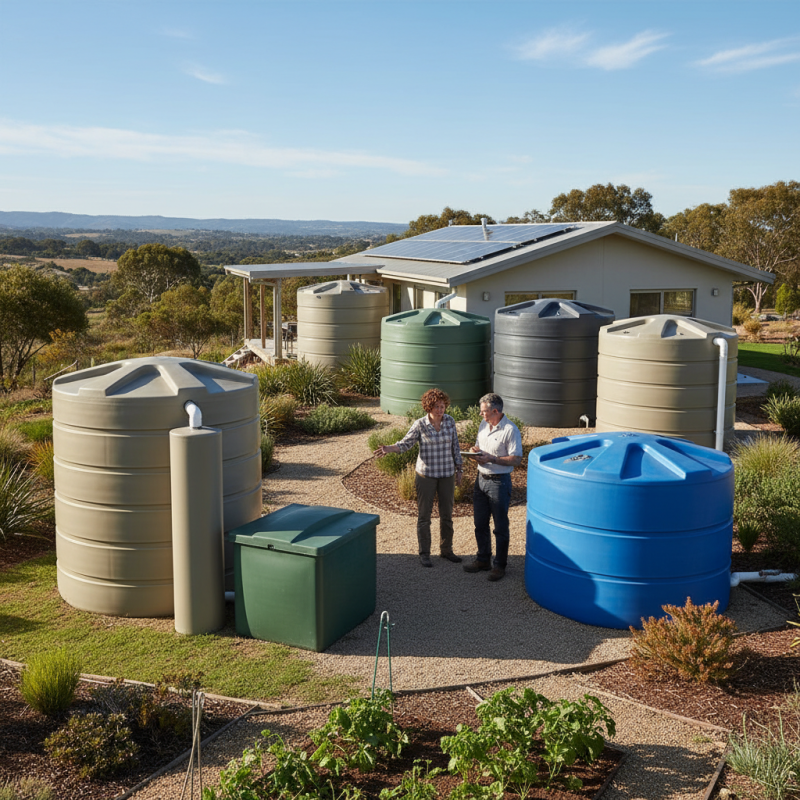
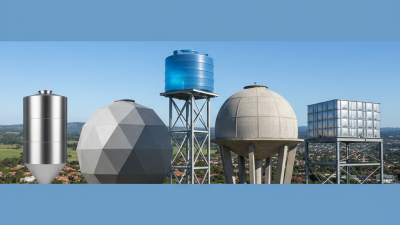
When considering poly water tanks, understanding the available types is crucial. There are various designs tailored for different needs. For instance, vertical tanks are common for space-saving requirements. They can fit neatly against walls or fences. Horizontal tanks, on the other hand, are great for larger volumes. They distribute weight evenly, making them more stable in some environments.
Another type is the slimline tank. This option is ideal for compact areas. Its design maximizes water storage without taking up too much space. Some people overlook the importance of tank thickness. A thicker tank wall provides better durability. However, it may add to the weight, making it harder to move.
In addition to size and shape, consider the tank's color and UV resistance. Tanks that are darker can heat up quickly in the sun. This may not be ideal for all uses. Reflecting on your needs and environment will help you choose wisely. Even small details matter in this ultimate selection process.
Ultimate Tips for Choosing Poly Water Tanks for Your Needs
| Type of Poly Water Tank |
Capacity (Liters) |
Features |
Uses |
| Horizontal Tank |
1,000 - 5,000 |
Low profile, space-efficient |
Agriculture, irrigation |
| Vertical Tank |
500 - 10,000 |
Tall design for large volume |
Residential, commercial |
| Underground Tank |
3,000 - 15,000 |
Concealed, avoids UV degradation |
Stormwater management, fire protection |
| Slimline Tank |
400 - 2,500 |
Space-saving design |
Urban areas, limited space |
| Dual Chamber Tank |
1,500 - 5,000 |
Separate storage for drinking water |
Household, safe drinking |
Key Factors to Consider When Selecting a Poly Water Tank
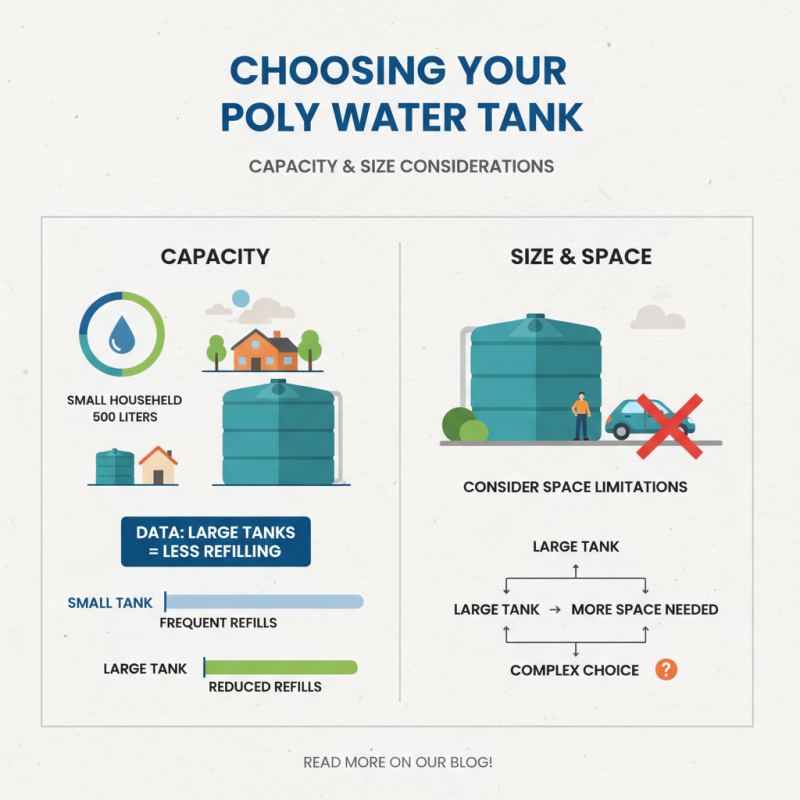
When selecting a poly water tank, several key factors demand attention. First, consider the tank's capacity. A small household may require only 500 liters, while larger properties need over 5,000 liters. Data suggests that larger tanks can significantly reduce refilling frequency. However, a large tank may occupy more space, adding to the complexity of your choice.
Durability is another critical aspect. Quality poly tanks can last over 20 years. However, not all tanks are created equal. Some may degrade faster due to UV exposure. It’s essential to evaluate the production process and materials used. Look for tanks with UV stabilizers to prevent cracks.
Additionally, weight and installation logistics matter. Heavier tanks are often more stable but may require professional installation. Some buyers overlook this aspect and face difficulties later. The right location for installation is crucial. If placed incorrectly, the tank could be hard to access. Consider your landscape and potential obstacles, like trees or buildings. Keep these in mind to ensure a satisfactory investment in your water storage solution.
Assessing Your Water Storage Capacity Requirements
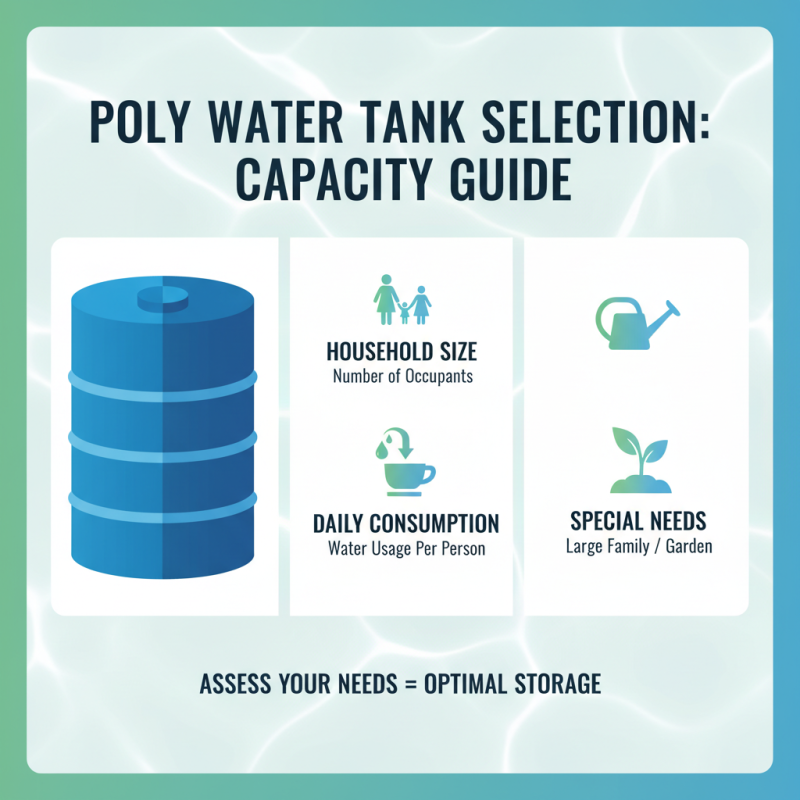
When choosing poly water tanks, assessing your water storage capacity is crucial. You need to know how much water you actually require. This depends on your household size. Consider the number of occupants. Think about your daily consumption. Are there any special needs? For example, a larger family or garden can impact your requirements.
Tips: Calculate water needs based on daily usage. Each person typically consumes around 50 to 100 liters a day. Include extra for gardening or pets. It might be useful to keep track for a week. This will give you a clearer picture. Avoid underestimating your needs, as this can lead to shortages during dry seasons.
Also, consider future needs. Will your family grow? Are there plans for a larger garden? These questions matter. A slightly larger tank now can save you trouble later. Remember, water needs often change. Reflecting on your current habits can reveal surprising insights. Missing details today may affect your choices tomorrow.
Evaluating the Durability and UV Resistance of Poly Tanks
When selecting poly water tanks, durability and UV resistance are key factors. Poly tanks are often exposed to harsh weather conditions. This exposure can cause damage over time. Look for tanks made from high-quality polyethylene. The material should withstand extreme sunlight and temperature variations.
A vital aspect of durability is the tank's thickness. Thicker walls usually offer better protection against impacts and environmental stress. However, not all tanks are created equal. Some may look sturdy but fail under pressure. Investigate the manufacturer's claims carefully. Research actual user experiences rather than relying solely on advertising.
UV resistance is another important element. Tanks without proper UV protection can become brittle and begin to crack. Darker colored tanks may offer better UV protection. Lighter colors can fade more quickly in the sun. It’s important to evaluate the tank’s performance ratings. Read reviews and feedback to understand the long-term implications. This can help prevent future regrets and issues with your investment.
Evaluating Durability and UV Resistance of Poly Water Tanks
Cost Analysis: Budgeting for Your Poly Water Tank Purchase
When budgeting for a poly water tank, consider your specific needs. The size of the tank largely determines the price. Smaller tanks are more affordable, while larger tanks require a bigger investment. Look for local suppliers to avoid high shipping costs. This can help you save significantly on your overall budget.
In addition to the tank itself, factor in installation costs. Do you have the skills to do it yourself, or will you need professional help? Sometimes, DIY projects can lead to unexpected challenges. Errors in installation could lead to leaks or damage. This might mean extra expenses later on. Always prepare for possible contingencies in your budget.
Lastly, remember ongoing maintenance. Some tanks may require more care than others. Regular cleaning and inspections are crucial for longevity. Neglecting maintenance can lead to costly repairs. By planning for these expenses, you can avoid surprises in the future.