Access to clean drinking water is crucial for maintaining good health. A Drinking Water Tank ensures that households have a reliable supply of pure water. According to Dr. Emily Green, a leading water quality expert, “A well-maintained Drinking Water Tank can reduce health risks significantly.”
Having a Drinking Water Tank means safeguarding your family. It protects against contamination that can lead to serious illnesses. Many underestimate the importance of proper water storage. A neglected tank can become a breeding ground for bacteria.
Regular maintenance is vital. Not everyone knows how to care for a Drinking Water Tank properly. As Dr. Green emphasizes, “Understanding your tank's role can transform your health.” Families should take time to assess their water storage systems. Investing in a reliable tank could be a life-saving decision.

Drinking water is vital for our overall health. Our bodies are about 60% water, which means hydration is crucial. It affects every cell and organ. Without adequate water, we face fatigue and diminished focus. Even mild dehydration can lead to headaches and irritability.
A drinking water tank ensures a reliable supply. It provides clean, accessible water daily. However, we often overlook its importance. Many people don't drink enough water. They may prefer sugary drinks or forget to hydrate. This can lead to long-term health issues.
Incorporating more water into our routine can be challenging. We can refill a water bottle or keep one nearby. Adding fresh fruits can enhance the flavor and encourage drinking. Simple actions can significantly impact our health.
| Benefit | Description | Recommended Daily Intake (liters) |
|---|---|---|
| Hydration | Helps maintain the body's fluid balance, crucial for all bodily functions. | 2-3 liters |
| Weight Management | Drinking water can help control calorie intake and enhance metabolism. | 2-3 liters |
| Skin Health | Proper hydration keeps skin supple and reduces dryness and irritation. | 2-2.5 liters |
| Kidney Function | Adequate hydration aids in the filtration of waste from the blood. | 2-3 liters |
| Digestive Health | Drinking sufficient water helps prevent constipation and aids digestion. | 2-2.5 liters |
| Cognitive Function | Hydration is key for concentration, alertness, and overall brain health. | 2-3 liters |

Drinking water tanks are crucial for maintaining health in home settings. They provide a steady supply of clean water, vital for hydration. According to the CDC, nearly 7% of households in the U.S. suffer from water quality issues. A drinking water tank can help mitigate these problems.
With a reliable tank, families can ensure access to safe water. Studies show that adequate hydration improves cognitive function and reduces fatigue. The World Health Organization emphasizes that clean water contributes to overall wellness. It’s alarming that many people overlook this simple fact, leading to health risks.
However, not all water tanks are created equal. Some can harbor bacteria if not cleaned regularly. Families must remain diligent about maintenance. Investing in a tank is not just about convenience; it’s an essential health safeguard. It’s worth reflecting on how often we take clean water for granted.
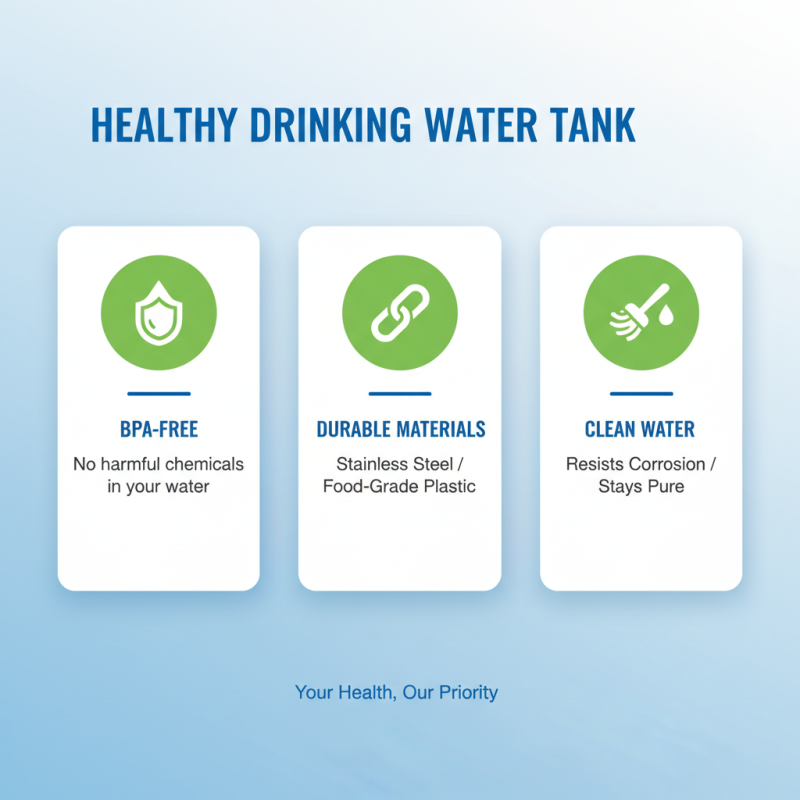
When choosing a drinking water tank, certain features are vital for your health. Look for materials that are BPA-free. This prevents harmful chemicals from leaching into your water. A durable tank made from stainless steel or food-grade plastic is ideal. These materials resist corrosion and ensure water stays clean.
Capacity is also crucial. A tank that holds enough water for your household needs will cut down on refills. An overflow feature can help manage excess water. It’s a small addition that can save you from unexpected spills.
Filtration is key in any drinking water tank. Ensure the tank has a built-in filter that removes contaminants. Regular maintenance and filter replacement are essential for health. Consistent monitoring can prevent potential issues from arising. These aspects should not be overlooked if you want safe drinking water.
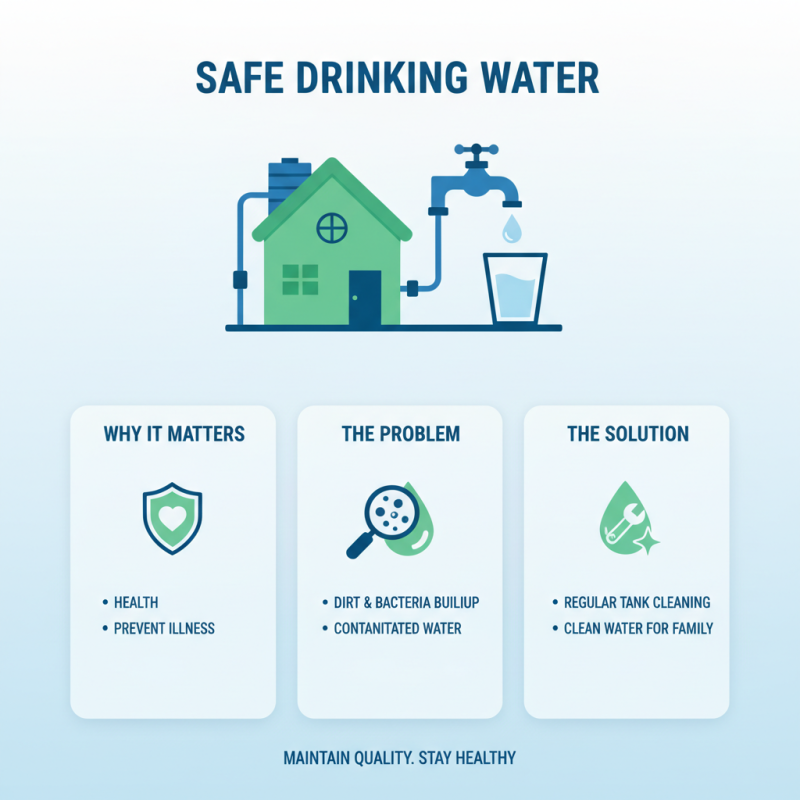
Maintaining the quality of your drinking water is crucial for your health. Regular maintenance of your water tank can prevent contamination. Dirt and bacteria might build up over time, impacting water quality. Keeping the tank clean ensures safe drinking water for you and your family.
**Tips:** Regularly inspect the tank. Look for cracks or leaks. If you notice discoloration, it’s time to investigate.
Cleaning is essential. Use appropriate disinfectants to kill harmful microbes. Rinse thoroughly after cleaning. It's not just about aesthetics; a dirty tank can lead to health issues. Don't overlook this step.
**Tips:** Schedule cleanings at least twice a year. Keep a log of maintenance activities. Water clarity and taste can signal issues that need attention. Stay proactive. Trust your senses; if something seems off, check it out!
Water is vital for our health, but how we store it matters. Poor water storage can lead to contamination. Bacteria thrive in dirty tanks. When we drink from these tanks, we risk infections. Waterborne diseases can result in severe illness. This is a reality that many overlook.
Every household must consider the quality of stored water. A neglected tank can harbor harmful substances. Algae and mold often grow in stagnant water. Even small changes, like a cracked tank, can lead to ongoing issues. Regular maintenance is essential but often forgotten.
Many people trust tap water without questioning its safety. They might assume all is well. However, not knowing the state of storage can be dangerous. Awareness is crucial. Understanding the risks can lead to better choices. Investing in proper tank care is worth the effort for family health.