How to Choose the Right Hdg Water Tank for Your Needs?
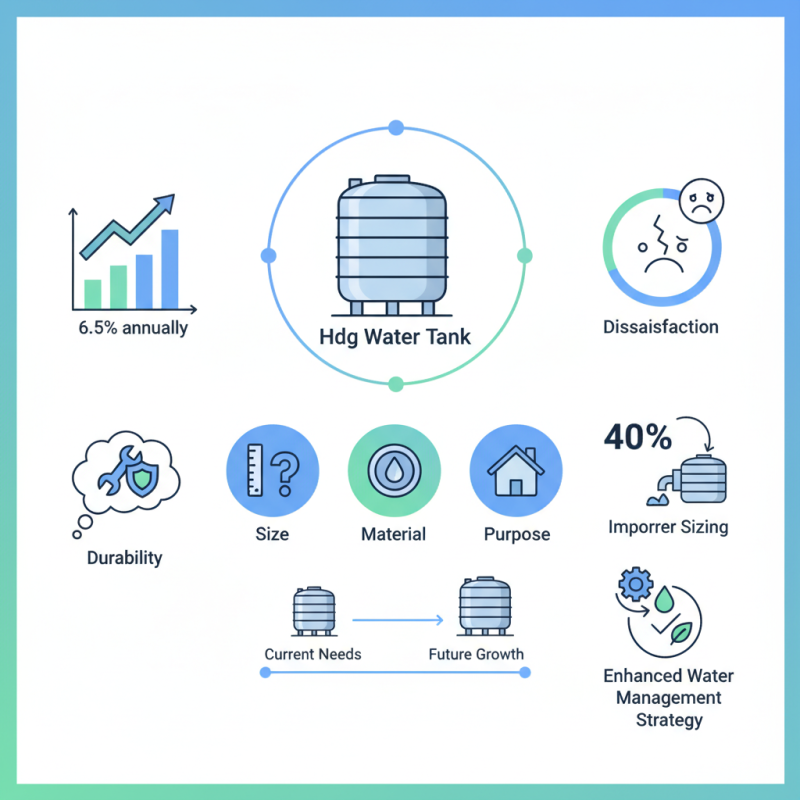
Choosing the right Hdg Water Tank can significantly impact your water storage solutions. According to a recent industry report, the global water tank market is projected to grow by 6.5% annually. This increase emphasizes the importance of selecting a tank that meets your specific needs. As John Smith, a leading expert in water storage technologies, states, “Investing in the right Hdg Water Tank means investing in longevity and efficiency.”
When considering a Hdg Water Tank, several factors come into play. Size, material, and purpose are crucial aspects. Many consumers overlook the tank’s durability. A poorly chosen tank can lead to leaks or structural failures. The right choice ensures sustainability and minimizes replacement costs. Interestingly, over 40% of users report dissatisfaction due to improper sizing.
Think about your actual water usage. Will the tank support your current needs? Or do you expect future growth? These questions are vital. As you navigate the options, remember that a carefully selected Hdg Water Tank can enhance your water management strategy.
Identifying Your Water Storage Needs and Requirements
When choosing an HDG water tank, understanding your water storage needs is crucial. Start by assessing your daily water consumption. Determine how much water your household or business requires. This can guide you in selecting the right tank size. For example, a small family may only need a 500-liter tank, while larger families or businesses might require several thousand liters.
Next, consider the space you have available. The tank must fit within your designated area without causing inconvenience. Think about accessibility as well. Is it easy to install and maintain? Sometimes, people overlook these factors. A well-placed tank can save you time and effort in the long run.
Lastly, reflect on the purpose of the water storage. Will the water be used for drinking, irrigation, or industrial processes? Each situation has specific requirements. You might need a tank that can ensure the water stays clean and safe. Not everyone factors this into their decision. Taking the time to identify these details can lead to better choices.
Understanding Different Types of Hdg Water Tanks
When choosing a hot-dip galvanized (HDG) water tank, it's essential to understand the different types available. HDG tanks are widely known for their corrosion resistance and durability. However, users often overlook specific needs. There are primarily three types: horizontal tanks, vertical tanks, and sectional tanks. Each has unique benefits, depending on the intended application.
Horizontal tanks are commonly used in smaller installations. They require less vertical space. Alternatively, vertical tanks offer greater capacity for larger projects. They can hold larger volumes and fit in tighter spaces. Sectional tanks provide flexibility for various installations. They are customizable and can be assembled on-site. However, assembling sectional tanks often poses design and engineering challenges.
Data shows that more than 40% of users face issues with improper tank selection. Potential problems include space constraints and local regulations. A report by the American Water Works Association highlights that improper sizing can lead to inefficiencies. It may result in increased operational costs and reduced lifespan of the tank. Most importantly, considering future expansion and maintenance is crucial. Make sure to analyze your requirements thoroughly before deciding.
Comparison of Different Types of HDG Water Tanks
Evaluating the Size and Capacity of Hdg Water Tanks
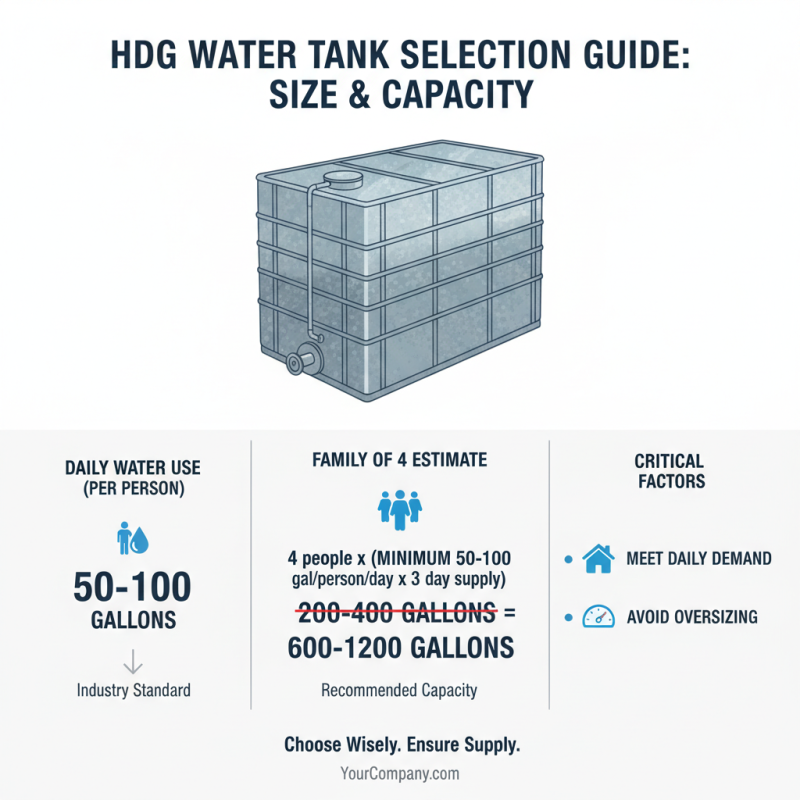
When selecting a hot-dipped galvanized (HDG) water tank, size and capacity are critical factors. The right tank should meet your daily water demand without overestimating your needs. A general guideline is to assess the daily consumption per person. According to industry standards, an average person uses around 50-100 gallons of water daily. Therefore, for a family of four, a tank capacity of at least 600-1200 gallons would be suitable.
It's essential to consider peak usage times as well. For instance, morning hours often see higher water consumption. A tank that cannot handle these spikes may lead to inconvenience. Industry data suggest having an additional buffer of 20-30% in capacity to accommodate unexpected spikes. Opting for a tank size that feels slightly excessive might prevent future issues.
Moreover, space constraints should also be a consideration. Many installations do not account for the actual size of the tank. Before making a purchase, measure your space accurately. Ensure that the tank dimensions, including height and width, fit your site. Overlooking these details can lead to costly adjustments or even a wrong choice. A poor fit is not only impractical but may also cause structural concerns.
Assessing Material Quality and Durability of Hdg Water Tanks
When choosing a hot-dipped galvanized (HDG) water tank, understanding material quality and durability is crucial. HDG tanks are known for their resistance to corrosion, making them ideal for various environments. According to industry reports, tanks made with higher zinc content exhibit greater longevity, often lasting over 20 years. The quality of steel used also plays a significant role. Thicker walls can provide better insulation and protection against external elements.
Tips: Always review technical specifications before purchasing. Look for tanks with a strong warranty, as this reflects the manufacturer's confidence in durability.
Another factor to consider is weld quality. Poor welding can lead to leaks over time. It is essential to assess certifications and manufacturing processes. Many tanks are tested to meet strict industry standards. Ensure that the tank you choose has passed these tests for quality assurance.
Tips: Check customer reviews related to tank longevity. Real-life experiences provide insight into the product's durability. When in doubt, consider consulting with industry experts or engineers for recommendations.
Considering Installation and Maintenance Factors for Hdg Water Tanks
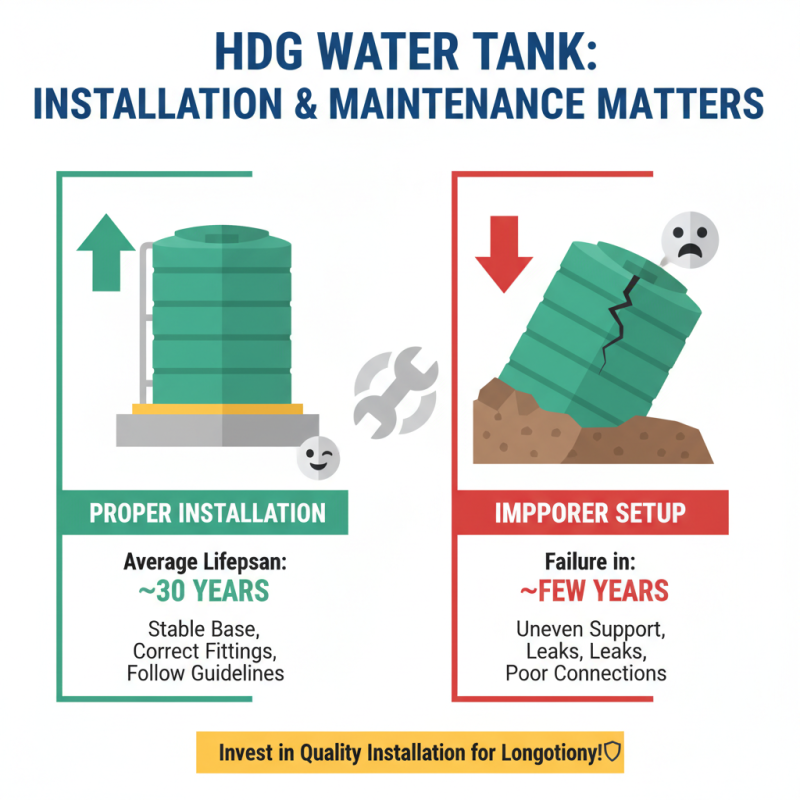
When choosing an HDG water tank, installation and maintenance factors are crucial. Many reports indicate that improper installation can significantly reduce the tank's lifespan. For example, the average lifespan of a well-installed tank is around 30 years, while poor setups can lead to failure within just a few years.
The location of the tank matters. It should be easily accessible for maintenance but not too close to other structures. Regular inspections are necessary to prevent corrosion and leaks. Industry data shows that up to 40% of tank failures result from inadequate maintenance practices. It's essential to create a schedule for inspections and ensure you understand the tank's specifications.
Think about the materials used in the tank. While HDG offers durability, it's not entirely maintenance-free. Corrosion rates can vary based on environmental factors. For instance, tanks in coastal areas may need more frequent assessments. Some argue that opting for cheaper alternatives might save money initially, but it can lead to bigger problems long-term.