How to Choose the Best Flexible Water Tanks for Your Needs?
Choosing the right flexible water tanks is vital for various applications. These tanks offer convenience and adaptability in storage solutions. Their unique design allows them to conform to different spaces, making them suitable for outdoor and indoor use.
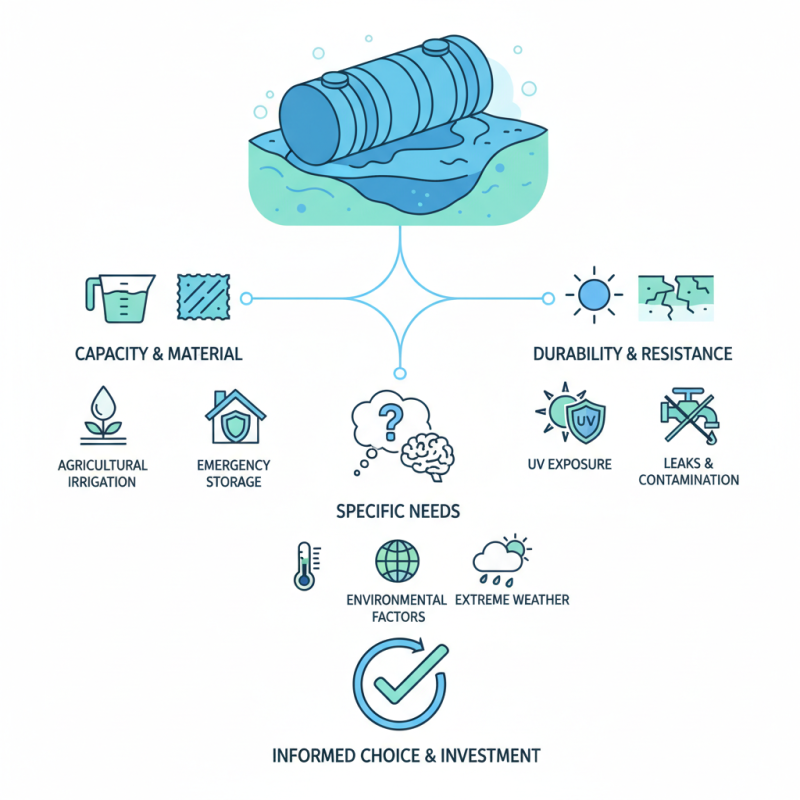
When selecting flexible water tanks, consider their capacity and material. Different types can serve various purposes, from agricultural irrigation to emergency water storage. It's important to assess the durability and resistance features of the tank. Some materials may degrade quickly under UV exposure. This can lead to leaks or contamination.
Reflect on your specific needs before making a decision. Think about placement and potential environmental factors. Will the tank be exposed to extreme weather? Being mindful of these aspects ensures a more informed choice. Flexible water tanks can be a strong investment, but it's crucial to choose wisely for the best results.
Understanding Different Types of Flexible Water Tanks Available on the Market
When selecting a flexible water tank, understanding the types available is crucial. Flexible water tanks come in various designs, including bladder tanks and pillow tanks.
Bladder tanks are often used for larger capacities, providing sturdy construction and easier transportation. Pillow tanks, on the other hand, are more portable and ideal for temporary storage solutions.
According to recent industry reports, the global market for flexible water tanks is projected to grow significantly, reflecting their increasing demand. These tanks are popular in agriculture, construction, and emergency response. They can hold anywhere from a few gallons to thousands, offering diverse options based on user needs.
Tips: Always consider the material used in the tank. High-quality materials resist UV damage and punctures. Check the tank's compatibility with the stored liquid. Safety is vital, especially for potable water storage. Reflecting on your requirements helps avoid future disappointments. Choose dimensions that fit your location. A poor fit could lead to leaks or damage, wasting resources and time.
Evaluating Storage Capacity: Choosing the Right Size for Your Needs
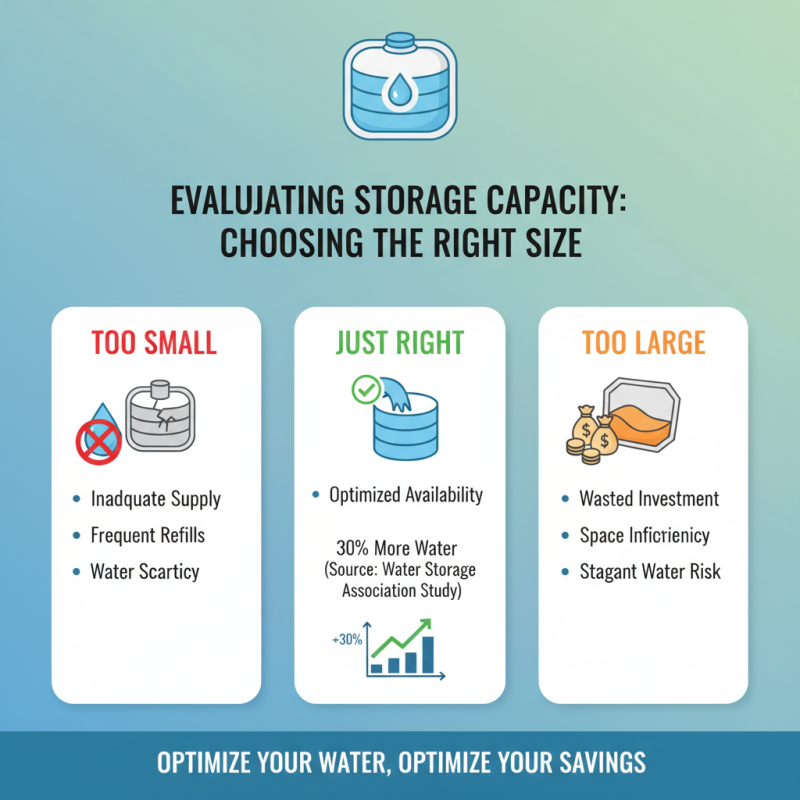
Choosing the right size of a flexible water tank is crucial. Incorrect sizing can lead to inadequate storage or wasted resources. A study by the Water Storage Association indicates that optimizing tank capacity can improve water availability by 30%.
When evaluating storage capacity, consider your specific needs. Factors such as daily water usage, peak demand, and available space all play a role. A small household may need a tank of 500 to 1,000 liters, while larger applications, such as farming, could require 10,000 liters or more. Analyzing your water consumption patterns is essential.
However, it’s not all straightforward. Many people underestimate their volume needs. They may choose a smaller tank, leading to shortages during peak times. You might need to review historical data on water usage. Being mindful of growth in consumption is also wise. Don’t let short-term thinking limit your options for the future. Consider how your needs may change over time.
Material Durability: Importance of UV Resistance and Chemical Compatibility
When selecting flexible water tanks, material durability stands out as a key factor. The tank's resistance to UV rays is essential for outdoor use. Tanks exposed to sunlight can degrade over time. UV resistance helps maintain structural integrity. It prevents cracks and leaks. Choosing a material with superior UV protection ensures longevity.
Chemical compatibility is also critical. Different substances can interact negatively with tank materials. For example, some chemicals can cause materials to break down. This leads to contamination of stored water. Understand what will be stored in your tank. Research the interactions between chemicals and materials.
Think about the environment where the tank will be used. Humidity, temperature, and exposure to elements all play a role. Tanks in extreme conditions may require extra reinforcement. Regularly inspect the tanks for wear and tear. This not only prolongs their life but also ensures safe storage. Consider the unique challenges you face when choosing your tank.
How to Choose the Best Flexible Water Tanks for Your Needs?
| Tank Material |
UV Resistance |
Chemical Compatibility |
Durability Rating |
| PVC |
Good |
Moderate |
3-5 years |
| Polyethylene |
Excellent |
High |
5-10 years |
| TPU (Thermoplastic Polyurethane) |
Very Good |
Excellent |
10-15 years |
| Nitrile Rubber |
Moderate |
Good |
5-7 years |
| Vinyl |
Fair |
Moderate |
2-4 years |
Analyzing Cost-Effectiveness: Initial Investment vs Long-Term Usage
When choosing flexible water tanks, cost-effectiveness is crucial. An initial investment may seem high, yet long-term usage often reveals savings. According to industry studies, flexible tanks can reduce water storage costs by up to 30%. This is significant for both residential and commercial users. The tanks' lifespan often exceeds a decade, providing substantial value over time.
However, there can be hidden expenses. Installation costs can vary. Proper site preparation is essential. Failure to account for this may lead to increased costs. Additionally, maintenance is key. Some users overlook regular checks, which can lead to deterioration and replacements. Regular maintenance extends the life of the tank and prevents costly damages.
Consider the material and design as well. High-quality materials may cost more upfront but offer greater durability. A recent report suggested that tanks made from advanced polymers can last twice as long as cheaper versions. It's a trade-off—spend less now and risk higher long-term costs or invest wisely for enduring performance.
Assessing Portability and Installation Requirements for Flexible Water Tanks
When considering flexible water tanks, portability is crucial. Many users prioritize tanks that can be easily transported to various locations. According to a 2021 industry report, about 60% of consumers prefer tanks weighing less than 200 pounds when full. This weight allows for easier relocation without needing heavy machinery. Smaller models can fold neatly when empty, making storage simple.
Installation requirements often vary with tank design. Some models require minimal setup, while others may need anchoring or support structures. Surveys indicate that 45% of users reported installation challenges, especially with larger tanks. Thoughtful planning is necessary. For example, ensuring a flat, supportive ground can prevent punctures. We need to consider these aspects.
Portability and installation aren't just technical details. They influence your overall satisfaction. If a tank is hard to move, it could lead to frustration. Many might overlook the importance of site preparation. A well-prepared space enhances usability. Therefore, evaluate your specific needs before purchase.